
The ZT-P133 Intelligent Cockpit: One Screen to Run the Whole Cab
Product Features
-
The ZESTECH ZT-P133 intelligent cockpit platform integrates a full digital LCD instrument cluster, infotainment centre and ADAS into one automotive-grade domain controller — built to IATF 16949, with multi-screen interaction, CANbus gateway and functional
Product Introduction
The ZT-P133 is ZESTECH’s answer to that ceiling. It is a full intelligent cockpit platform — a digital LCD instrument cluster, an infotainment centre and ADAS integration built on one automotive-grade domain controller, engineered to IATF 16949 standards for fleets, government tenders and importer retrofit programmes rather than single-car retail sales.
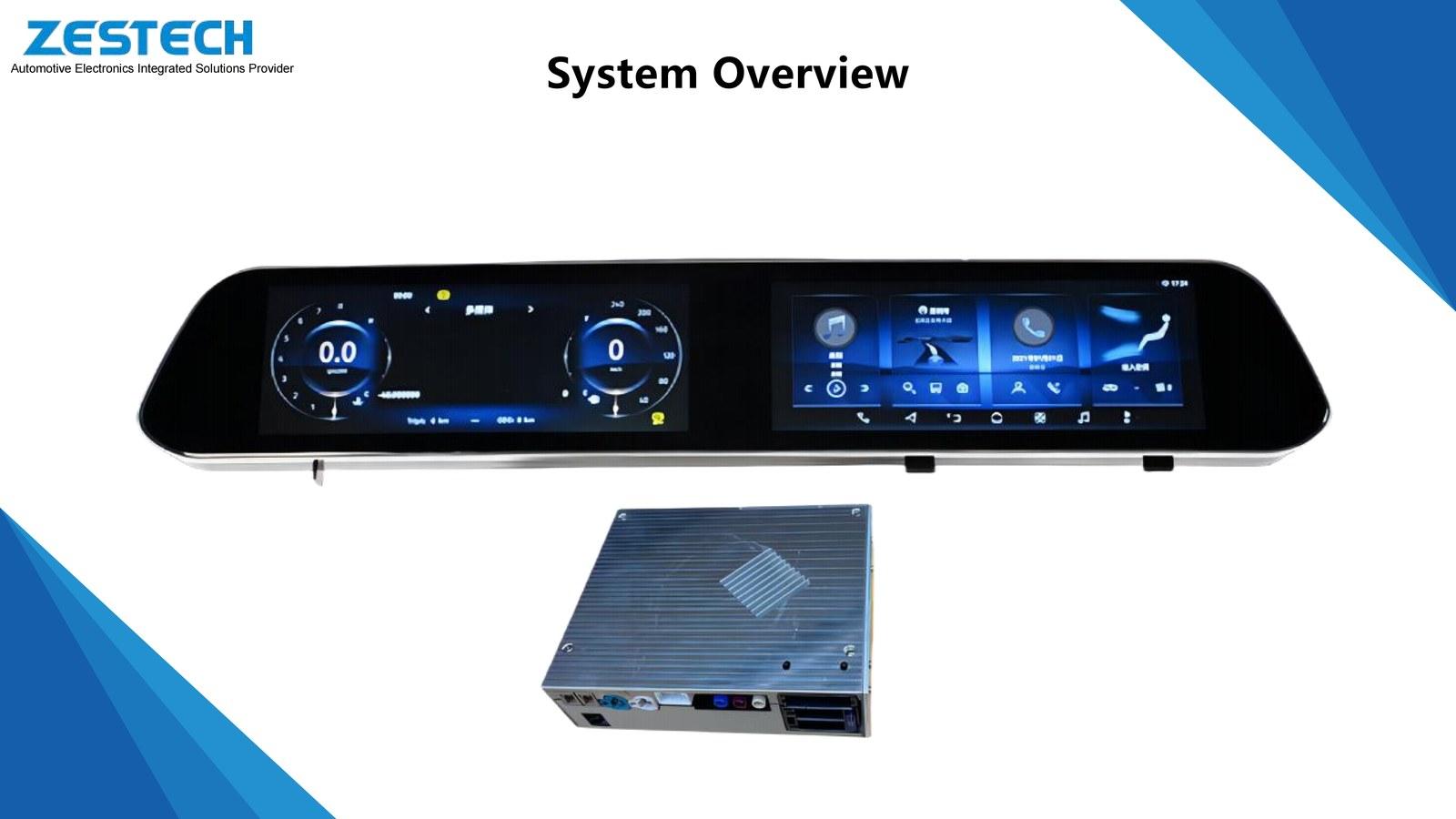
Fig. 1 — The ZT-P133: cluster and central display driven by a single intelligent cockpit domain controller.
What Exactly Is the ZT-P133?
Most aftermarket “cockpit” products are two separate boxes in one carton: a cluster here, a radio there, joined by nothing more than a shared power supply. The ZT-P133 is the opposite architecture — an intelligent cockpit domain controller that drives a full LCD digital instrument cluster, the central control entertainment and navigation display, and a driver-assistance layer, with both screens sharing vehicle data instead of duplicating it.
The official ZESTECH platform definition has three parts: integrated digital LCD instrument cluster + infotainment centre + ADAS, on automotive-grade high-stability SoC platforms, engineered to IATF 16949 standards, with multi-screen interaction, commercial fleet monitoring and active driver safety integration as declared capabilities. That is why the ZT-P133 targets a different buyer than our multimedia range: not an installer fitting one car, but a fleet operator, government tender or importer retrofitting commercial vehicles — someone buying a platform they can standardise on across a whole vehicle park.
The Problems It Solves
One Domain Controller, Two Different Screens
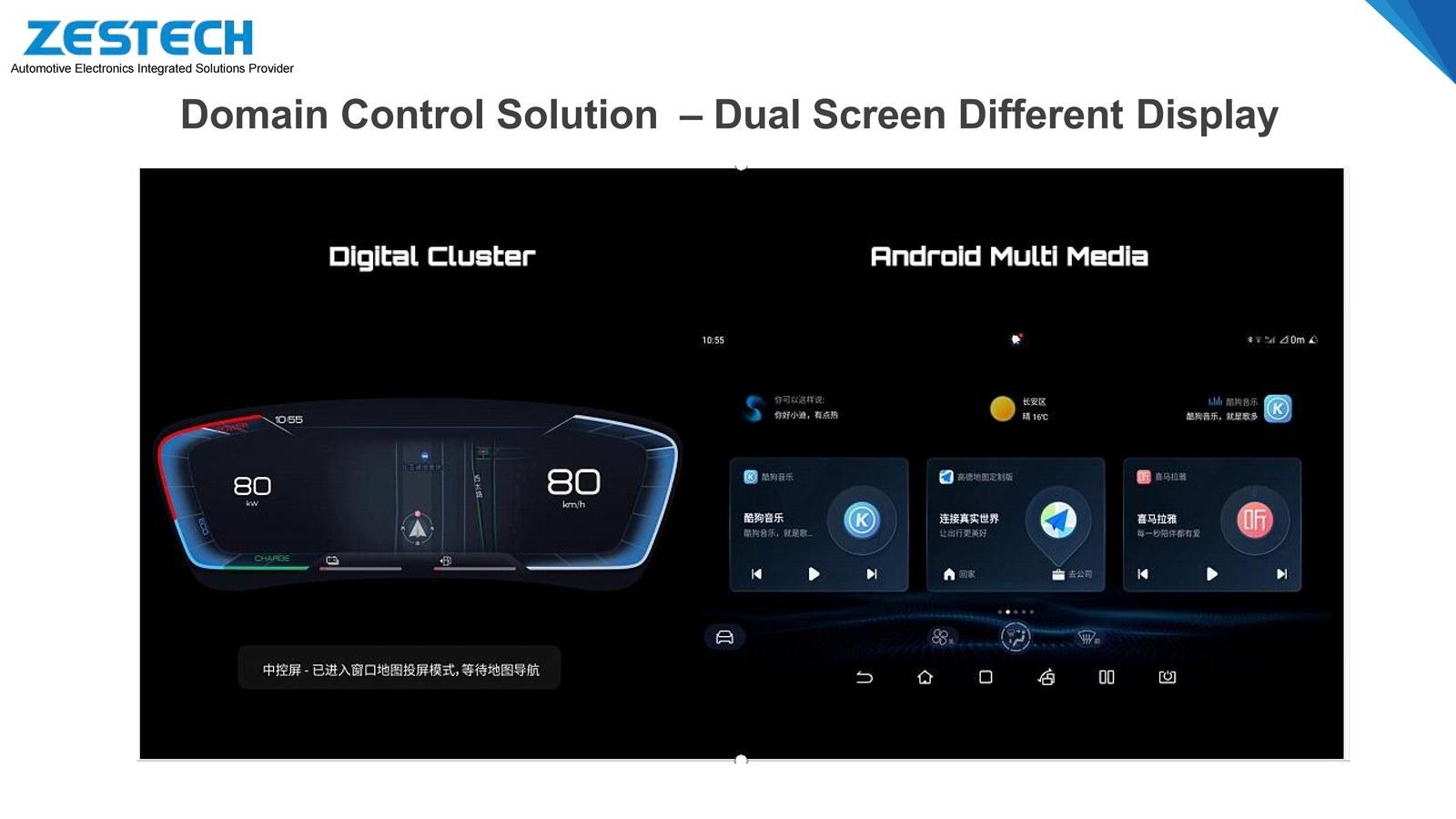
The defining feature is dual-screen different display — a digital cluster in front of the driver running a different interface, at a different resolution, with different content, from the same controller driving the central display.
Fig. 2 — Dual-screen different display: cluster and central display running different content from a single controller.
The design supports a four-screen layout and can cast the instrument view to a separate LVDS display — which matters for buses, trucks and utility vehicles where the driver’s information and the operator’s information belong in physically different places.
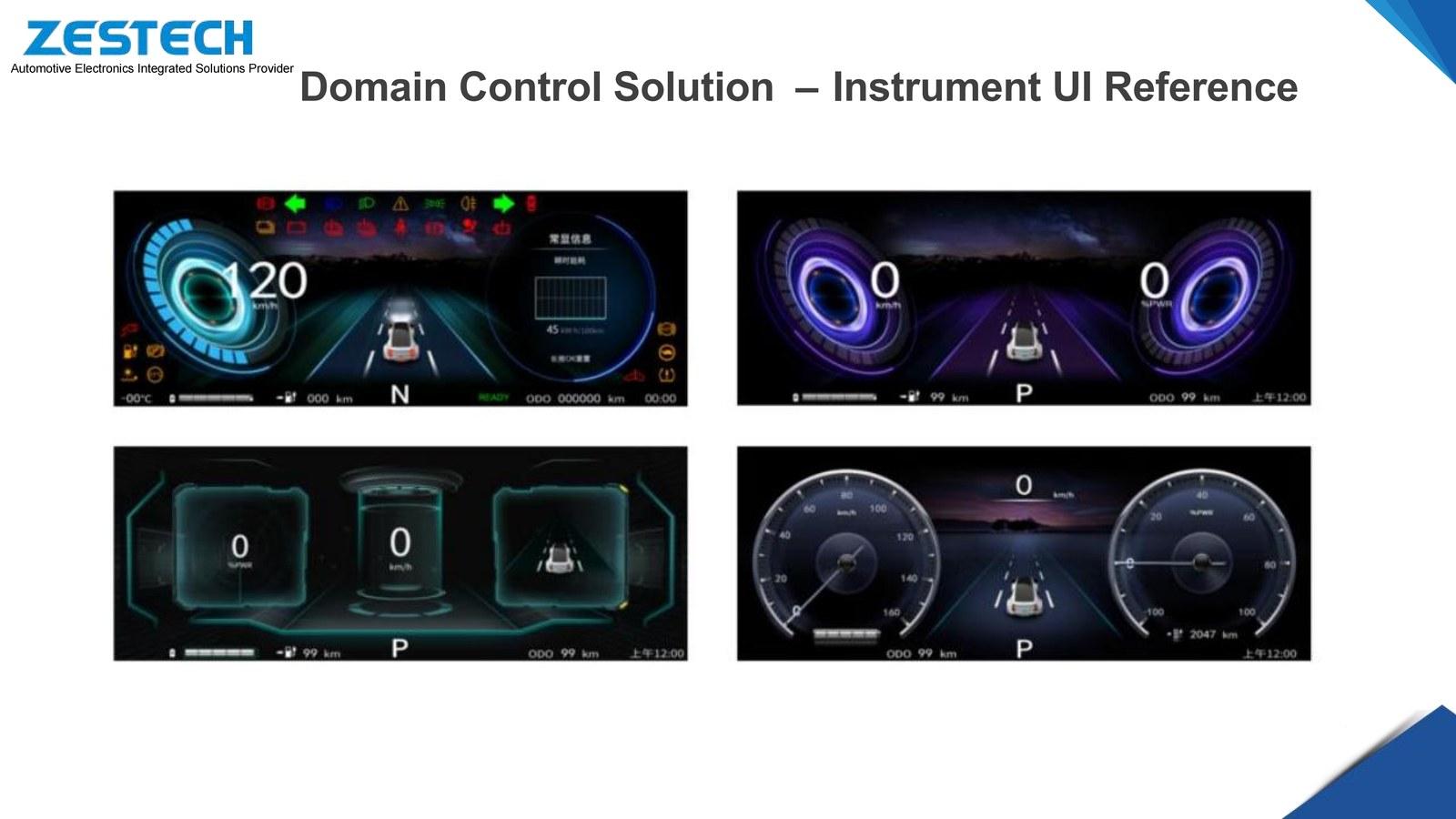
On the cluster side, a full LCD digital instrument cluster replaces mechanical gauges, rendering speed, RPM, warning icons and status on screen. It supports 3D UI with multiple themes, so one hardware platform can present as a commercial-vehicle or a passenger-car cluster depending on the programme, with high-performance GUI tools for custom themes in the customer’s branding. Surface treatments include AG (anti-glare), anti-fingerprint and anti-reflection coatings — addressed at real conditions, not showroom ones. An independent cluster path keeps vehicle speed and RPM displayable even when the main SoC stops supplying the instrument image.
Fig. 3 — Instrument cluster UI reference: multiple cluster themes and layouts on the same LCD cluster hardware.
On the infotainment side, the central display carries navigation, multimedia, radio with RDS, Bluetooth telephony with phonebook synchronisation, and phone projection through CarPlay and Android Auto, with local and online voice recognition and multi-language support. Connectivity is deliberately commercial rather than consumer: multi-way CAN with gateway capability, Ethernet, 4G with soft TBOX support, OTA upgrade and STR sleep/wake — the last two being what turn a retrofitted unit into something a fleet can maintain across a vehicle park instead of servicing one van at a time.
Functional Safety Is the Part Nobody Screenshots
This is the section that wins tenders, and the one competitors rarely want to discuss. In a cockpit where the cluster image is generated by the same SoC as the entertainment system, the obvious engineering question is: what happens when that SoC fails?
The ZT-P133’s answer is an independent safety path: a dedicated safety chip between the SoC and the display monitors the LVDS link in both directions, supervised by an external MCU.
- ✓LVDS input monitoring — if the synchronisation signal or clock from the SoC goes abnormal, or the LVDS line is disconnected, the safety chip raises an interrupt and the MCU posts a warning icon
- ✓Cluster takeover — in that condition the MCU can instruct the safety chip to take over the display of vehicle speed and engine rotation speed, so the driver never loses the essential gauges
- ✓LVDS output monitoring and frame integrity — faults on the path from safety chip to screen are detected the same way, and CRC values on defined pixel rows are compared frame to frame, so a frozen instrument image is detected rather than silently displayed
- ✓Area and icon verification — up to 8 configurable detection areas can be CRC-checked simultaneously, and critical indicator icons read from flash are verified against offline reference values, triggering an interrupt if a mismatch is found
For a tender document that is the difference between “we will use an automotive SoC” and being able to describe a monitored, verifiable display chain. For an importer, it is the difference between winning a fleet contract and being screened out at technical review.
Built for Programmes, Not One-Off Fits
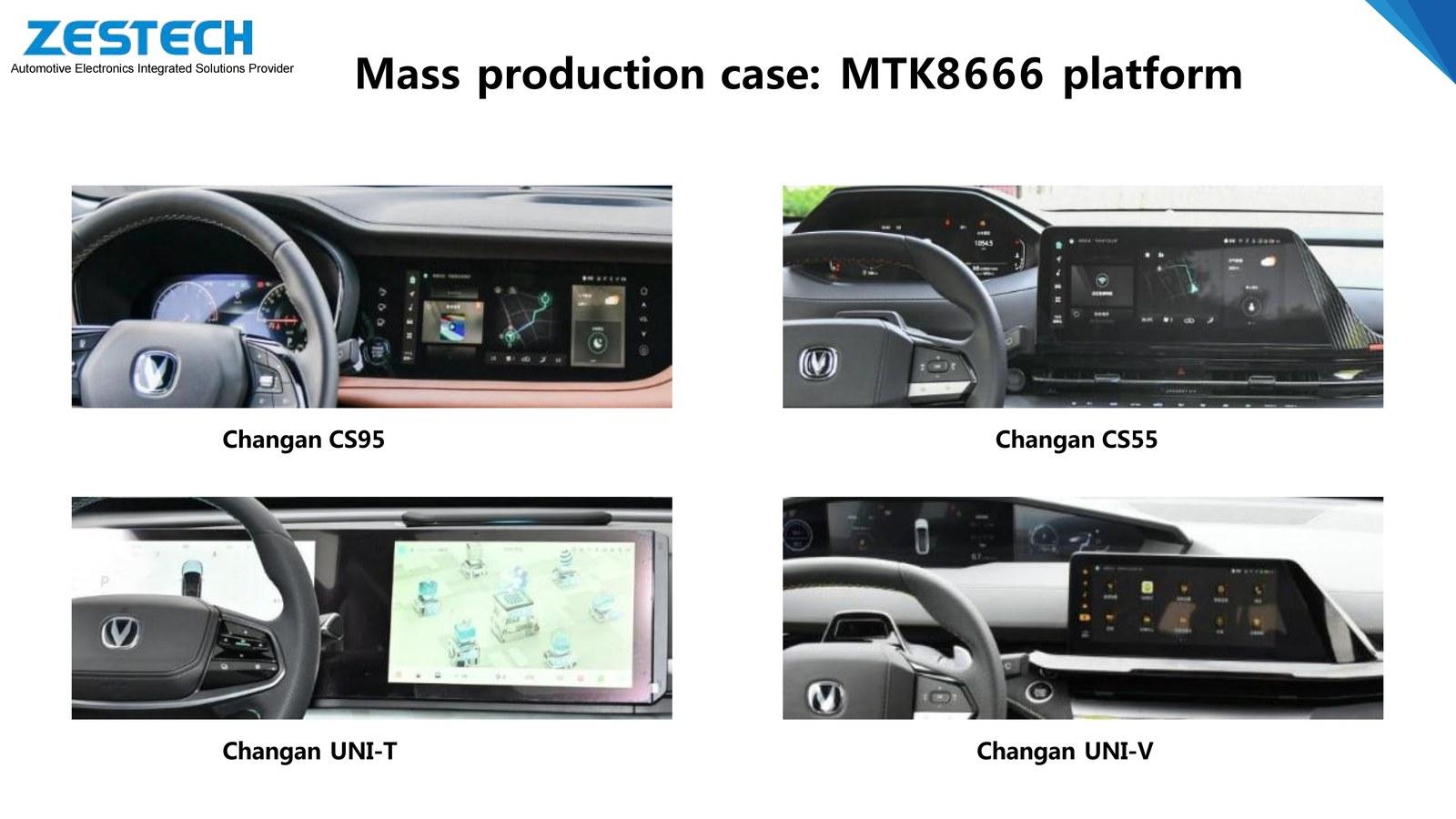
Cockpit business only works if the supplier can actually produce. ZESTECH’s cluster and cockpit platforms are in mass production across multiple automotive SoC platforms, so the hardware and software base is proven in volume before your programme starts — which is what shortens a project from years to months.
Fig. 4 — Mass-production cockpit programmes: the same cluster and display architecture is already shipping on automotive SoC platforms.
Driver Safety and Camera Integration
The third pillar is the safety layer, built from components already shipping in our commercial-vehicle programmes.
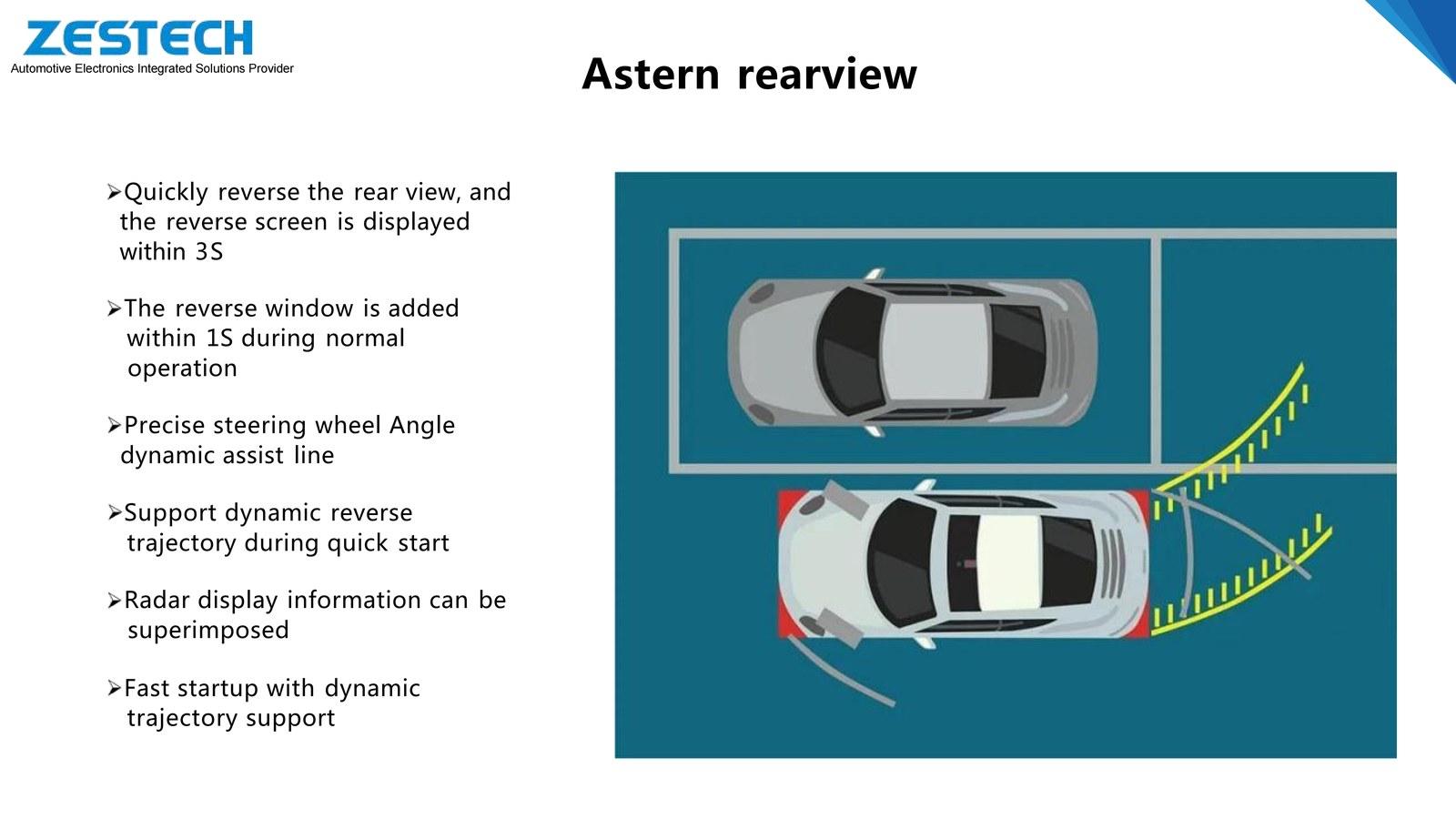
Fig. 5 — Camera integration: reversing view with guide lines plus front, rear and side camera inputs on the cockpit display.
- ✓Reversing camera with trajectory — static or dynamic guide lines with radar overlay, so proximity warnings appear inside the camera image
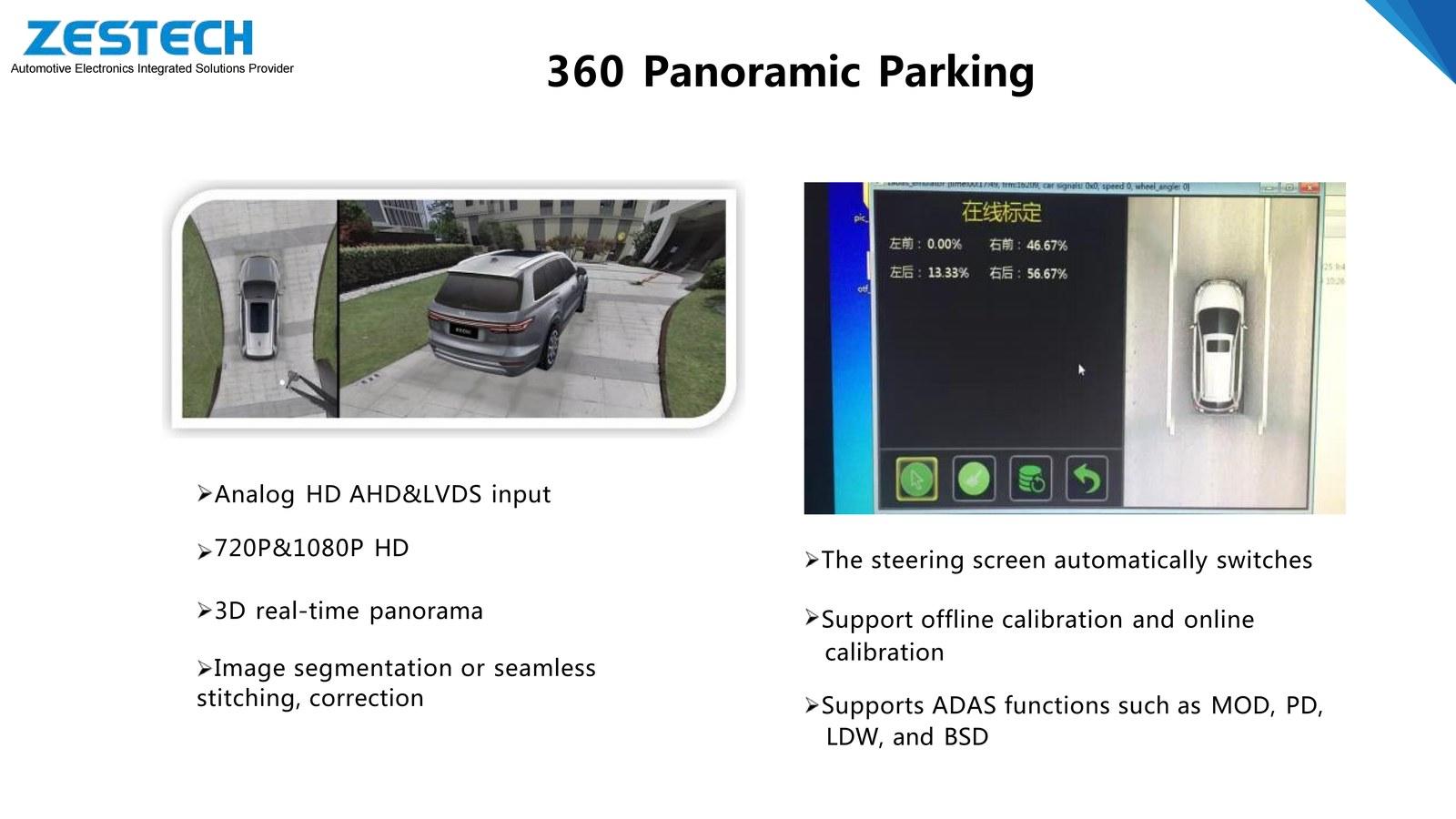
- ✓Panoramic surround view — four-camera stitching with seamless image mosaic and correction algorithms, under 8 seconds to a usable picture from boot, with parking-space recognition, parking guidance and a transparent chassis view
- ✓Extended safety functions — blind-spot detection, lane-departure warning and moving-object detection from the same camera set, plus a digital rearview mirror option with a 1-megapixel camera and a sub-55 ms video path
Fig. 6 — Panoramic parking support: surround view with parking-space recognition and guidance on the same cockpit display.
Product Introduction
The ZT-P133 is configured per programme, so the framework below is what we confirm with you rather than a fixed bill of materials:
To move a programme forward we need the vehicle brand, model, year and trim, original head-unit information, connector photographs, camera types already fitted, and your intended function list — enough for our engineering team to confirm a configuration instead of a best guess.
Why Choose ZESTECH
Cockpit programmes are long, so the decision is less about the demo unit than about who is still standing in year three.
- ✓Automotive-grade quality systems — manufacturing certified to IATF 16949 and ISO 9001, with conformity covering CE, FCC, E-Mark, RoHS, CCC and NTRA
- ✓Manufacturing depth of a real factory — a 50,000 m² production base, 7 production lines, annual capacity of 3 million units, 200+ employees and 50+ R&D engineers
- ✓Own engineering and IP — 125 authorized patents and 160 software copyrights; the functional-safety architecture above exists because it was developed in-house
- ✓One-stop cockpit development — cluster, infotainment, camera integration, CANbus work and customization from one supplier, which is what makes a tender response achievable on schedule
- ✓Export experience since 2013 — distributors, importers and fleet programmes across Europe, the Americas, the Middle East, Southeast Asia, Russia & CIS and Africa
Pricing depends on volume, display sizes, the vehicle platform, the level of software adaptation and the certification scope, so we quote against the project rather than publishing a number that would be wrong for almost everyone reading it.
Let’s Talk About Your Project
Send us your vehicle platform, target volumes and function list — we will come back with a ZT-P133 configuration proposal, an integration path and an OEM quotation.
Email: info@szzest.com
WhatsApp: +86 135 9032 6885
Tel: +86 755 2369 9550 | Web: www.szzest.com
Send Inquiry →Factory: Building A, Huada Industrial Park, Fuqiao Third Industrial Zone, Fuhai Street, Bao’an District, Shenzhen, China
#ZESTECH #ZTP133 #IntelligentCockpit #DigitalCluster #InstrumentCluster #AutomotiveDomainController #ADAS #FleetSolutions #CommercialVehicle #IATF16949 #CANbus #OTA #SurroundView #OEMCockpit #CarImporter #TenderReady #AutomotiveElectronics #SmartCockpit #VehicleIntegration #ZESTECHFactory

Tel: +86 755 2369 9550
Email: info@szzest.com
Add:
Building A, Huada Industrial Park, Fuqiao Third Industrial Zone,
Fuhai Street, Bao 'an District, Shenzhen, Guangdong


Design:jiasuweb