

Why the Same Head Unit Fits One Car Perfectly and Not Another: CAN Bus, Frame and Cable Explained
Product Features
-
Why the same head unit fits one car but not another: the three fitment layers - dash frame, wiring harness and CAN bus - plus how ZESTECH verifies fitment for 300+ models across your market.
Product Introduction
A head unit truly “fits” a car only when three separate layers match: the mechanical dash frame, the wiring harness, and the CAN bus configuration. Buyers who check all three layers before ordering stop losing workshop hours and stop losing margin on returns. This guide explains each layer in plain language, so you can predict which models will install cleanly in your market — before you ship a single carton.
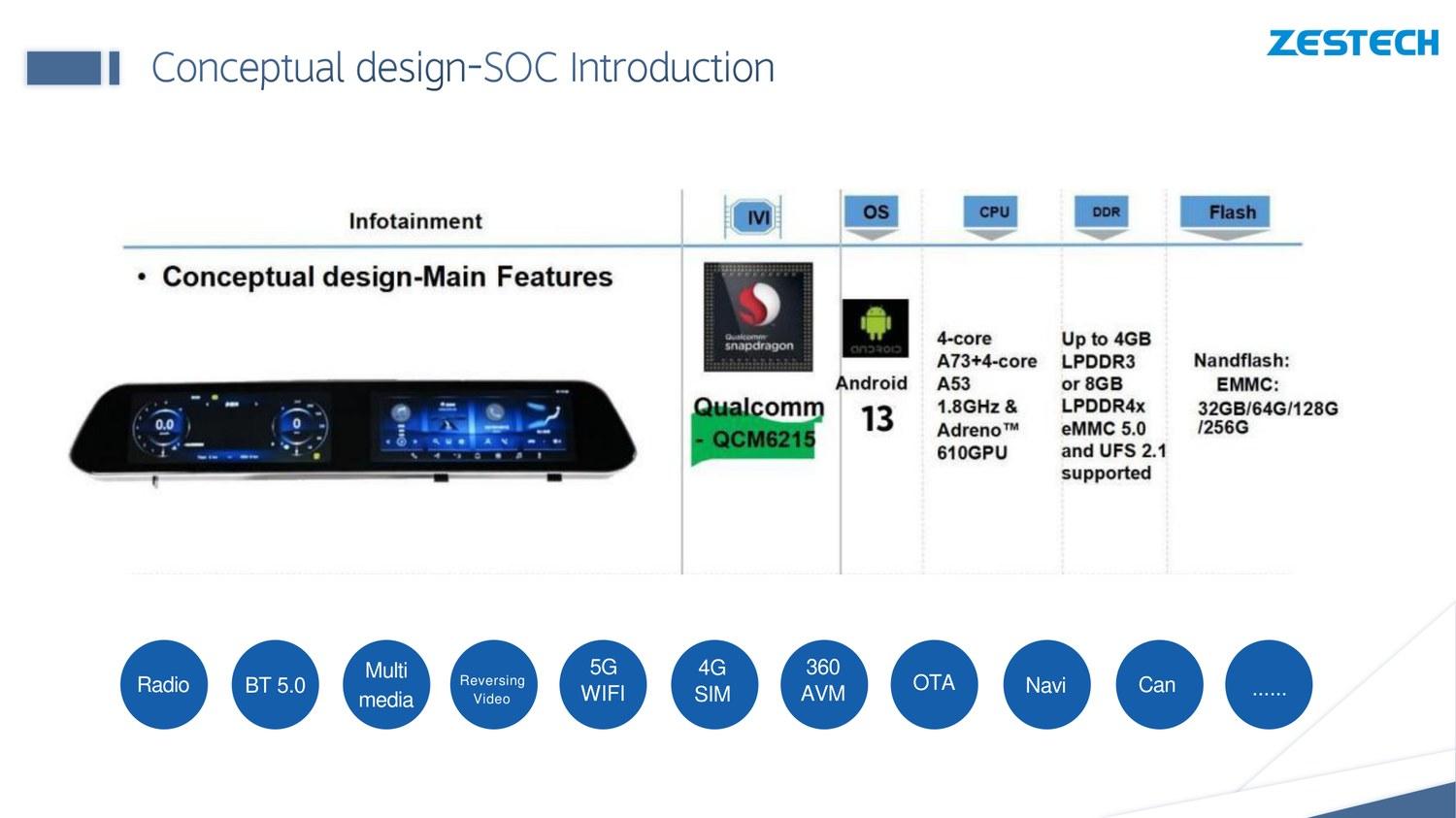
Fig. 1 — What a modern head unit must connect to: CAN network, radio, navigation, cameras, reversing video and connectivity modules. Fitment means matching all of these interfaces, not just the screen size.
Fitment Is Three Questions, Not One
When a supplier says a head unit “fits” a vehicle, the claim hides three different engineering questions. A model can pass one or two of them and still fail the installation. Ask all three, every time:
✓Does the frame fit the dash? — Dash openings, trim shapes and button surrounds differ across brands, models and even model years. A panel designed for a 2020 dashboard may not sit flush in a facelifted 2023 version of the same car.
✓Does the harness match the car? — Power, illumination, speakers, antenna, USB, microphone and camera wiring all arrive through one connector in most modern cars. The wrong adapter means cutting wires, and cutting wires means warranty risk.
✓Does the CAN configuration speak the car’s language? — The data network that carries steering wheel commands, parking sensor data and amplifier wake-up signals varies by brand and model. Skip this layer and the unit works, but the car stops responding to it.
Layer 1: The Dash Frame — Where Physical Fit Lives
The frame is the most visible layer. Aftermarket head units follow standard mechanical formats, while car dashboards do not: curved trim, integrated climate vents, odd-shaped openings and brand-specific button clusters all get in the way. That is why professional suppliers maintain vehicle-specific frame designs instead of relying on a universal mounting cage.
Two details decide whether an installation looks factory-made. First, the frame must match not just the model but the model year — a mid-cycle facelift can change the dash shape entirely. Second, the frame should carry over the car’s original styling lines, so the finished dashboard looks like it left the factory that way. This is the difference between a product that sells easily in your market and one that keeps coming back as a complaint.
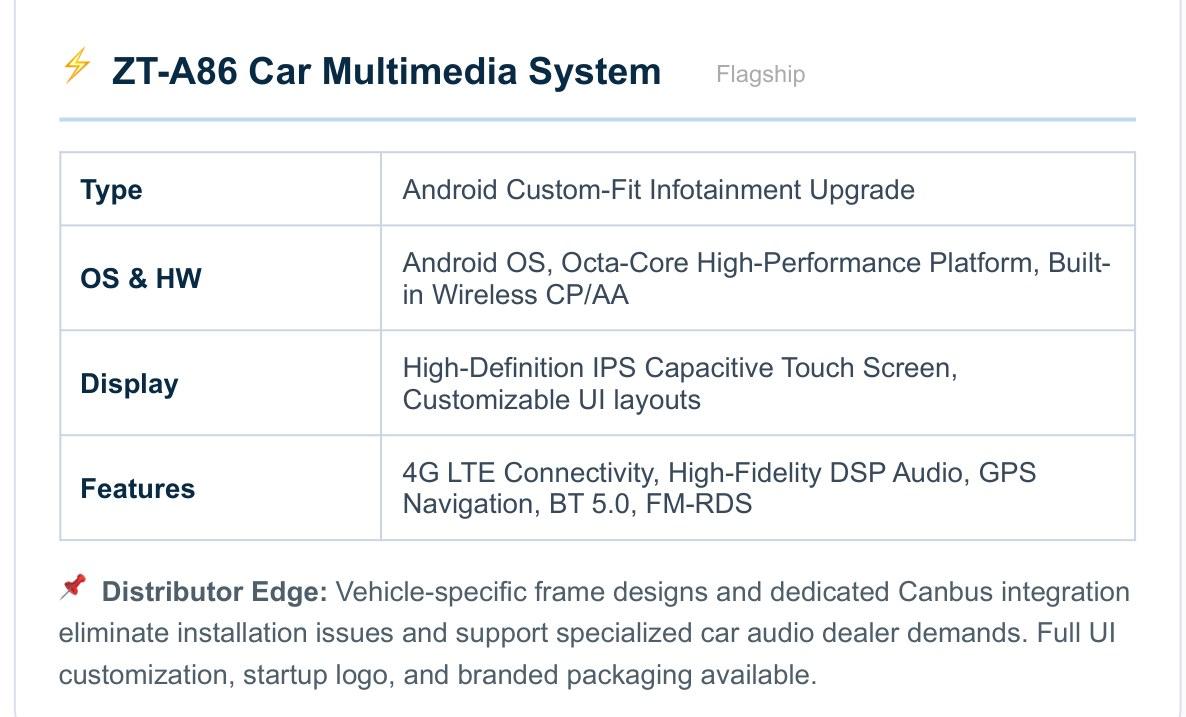
Fig. 2 — The ZESTECH ZT-A86 Car Multimedia System: an Android custom-fit infotainment upgrade backed by vehicle-specific frame designs and dedicated CANbus integration.
Layer 2: The Wiring Harness — Power, Sound and Peripherals
Behind the frame sits the electrical layer. A head unit needs constant battery power to remember settings, switched ACC power to wake with the ignition, speaker outputs, antenna feeds, and connections for the reversing camera, external microphone and USB ports. Modern cars compress all of this into one or two proprietary connectors, and every brand arranges the pins differently.
The professional answer is a model-specific harness adapter: the head unit side stays standardized, the car side matches the vehicle’s connector, and installation becomes plug-and-play. No wire cutting, no insulation tape, no fault codes caused by feeding power into the wrong circuit. When you compare quotations between suppliers, always ask what the harness solution is for your exact models — “universal, please cut and splice” is a red flag, not a cost saving.
Layer 3: CAN Bus — Why Buttons and Cameras Go Dead
The deepest layer is data. Modern vehicles run a CAN bus network in which modules constantly exchange messages: the steering wheel buttons publish their presses, the parking sensors publish distances, the amplifier listens for a wake-up command. A replacement head unit must join this conversation in the car’s exact dialect. When the CAN configuration is wrong, the symptoms are immediate and familiar:
✓Steering wheel controls stop working
✓The reversing camera never triggers when reverse gear is engaged
✓The factory amplifier stays silent or pops at startup
✓The unit drains the battery because it never receives the sleep command
This is why serious head unit platforms integrate multi-way CAN support with CAN gateway functions on board — and why the same hardware may need a different CAN configuration for two cars that look almost identical. When your supplier asks for the model year and trim level before quoting, they are not being difficult. They are identifying which CAN configuration your market actually requires.
The Shortcut That Skips All Three Layers
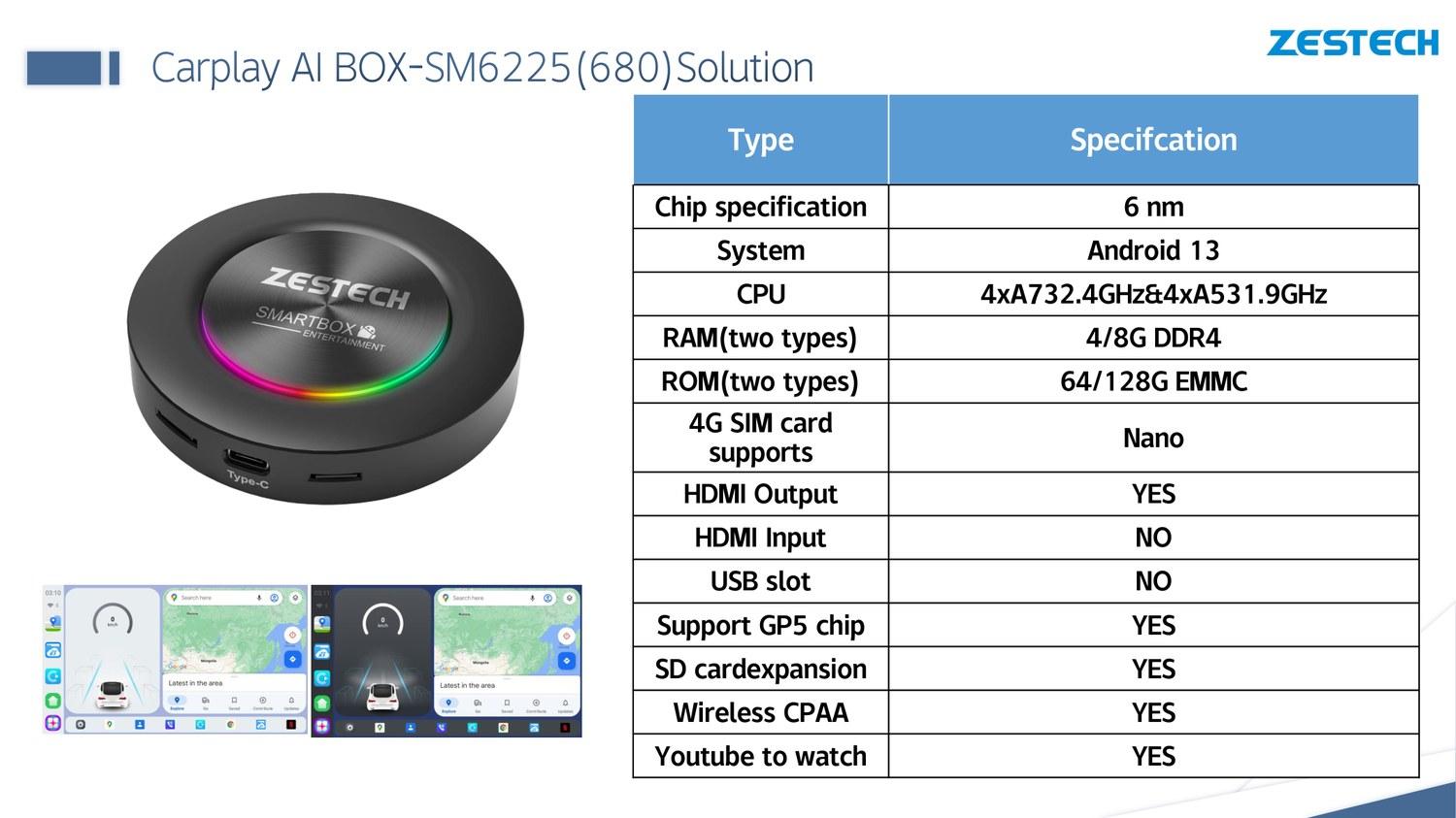
Not every retrofit needs frame, harness and CAN work. A CarPlay AI box takes a different route: it plugs into the car’s existing factory screen through the port the car already uses for wired CarPlay, and adds wireless CarPlay, Android Auto and a full Android environment on top. Because it piggybacks on the car’s own CarPlay protocol, there is no dash modification, no harness adapter and no CAN integration at all.
Fig. 3 — The ZESTECH CarPlay AI box on the 6 nm SM6225 platform: Android 13, wireless CarPlay and Android Auto, nano SIM — the retrofit path that needs no frame, harness or CAN configuration.
For your product mix, the logic is simple. Head unit replacements win where buyers want a large new screen and full Android, and they demand serious fitment engineering. AI boxes win where owners love their factory screen and refuse to touch the dashboard. Stocking both lets you serve both budgets — with completely different fitment risk profiles.
Product Introduction
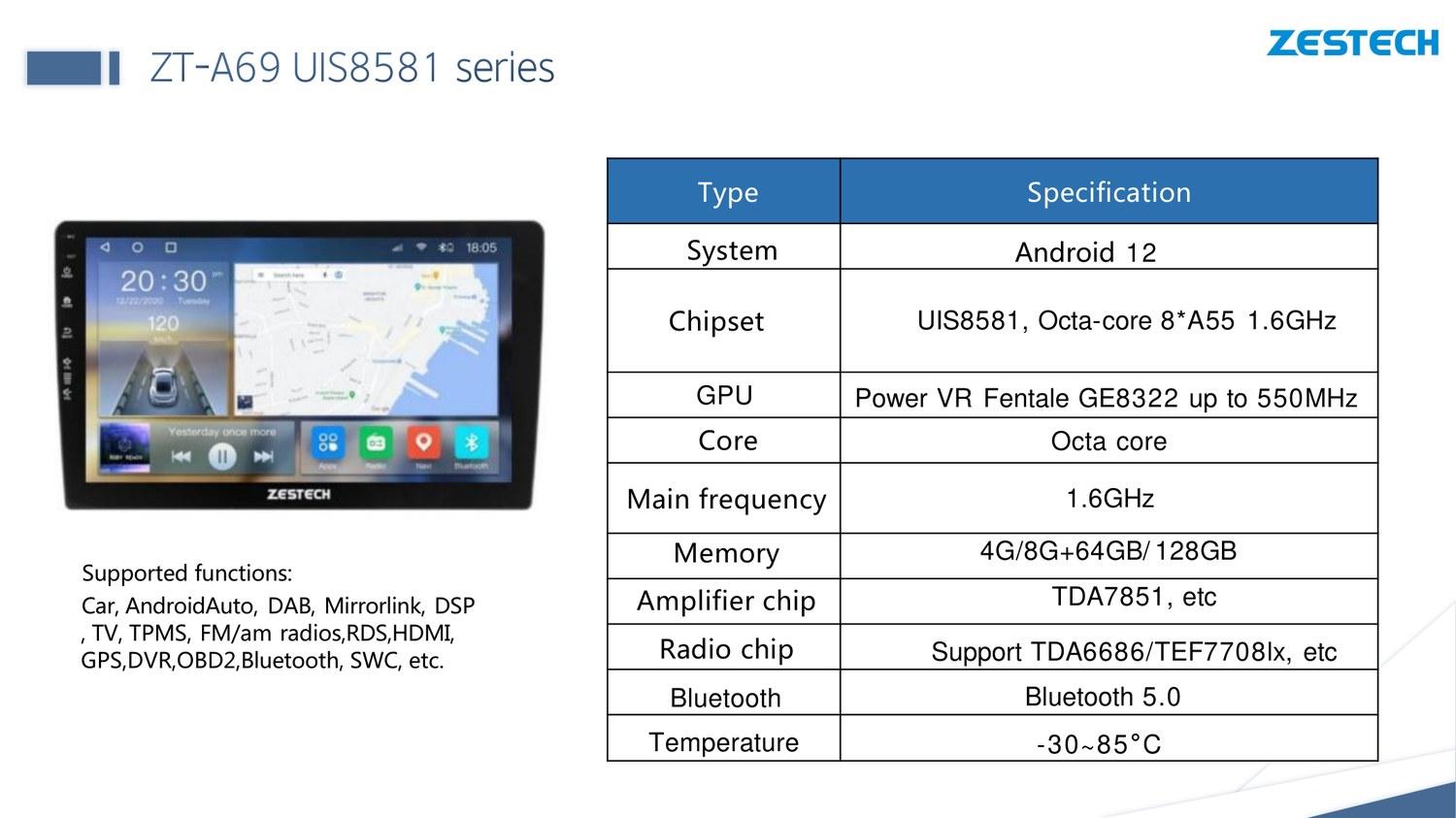
Fig. 4 — The ZT-A69 UIS8581 series specification sheet: every fitment-relevant platform detail on one page.
How We De-Risk Fitment Before You Order
Fitment failures are expensive after the container arrives, so the verification has to happen earlier. ZESTECH maintains verified fitment lists covering more than 300 vehicle models across Brazil, Iran, South Africa and South America — and for each model the answer covers all three layers: the frame, the cable solution and the CANbus requirement. You send us the best-selling models on your market’s list; we come back with a per-model quotation instead of a guess.
✓Per-model fitment confirmation — frame availability, harness type and CAN configuration confirmed for each model and model year
✓Sample-first verification — test the installation on a local vehicle before committing to volume
✓OEM depth — your logo, your boot animation, your packaging, your UI language set
Behind the fitment data stands our own manufacturing base:
Fig. 5 — The ZESTECH 50,000 m² own production base: 7 production lines and an annual capacity of 3 million units.
Why Choose ZESTECH
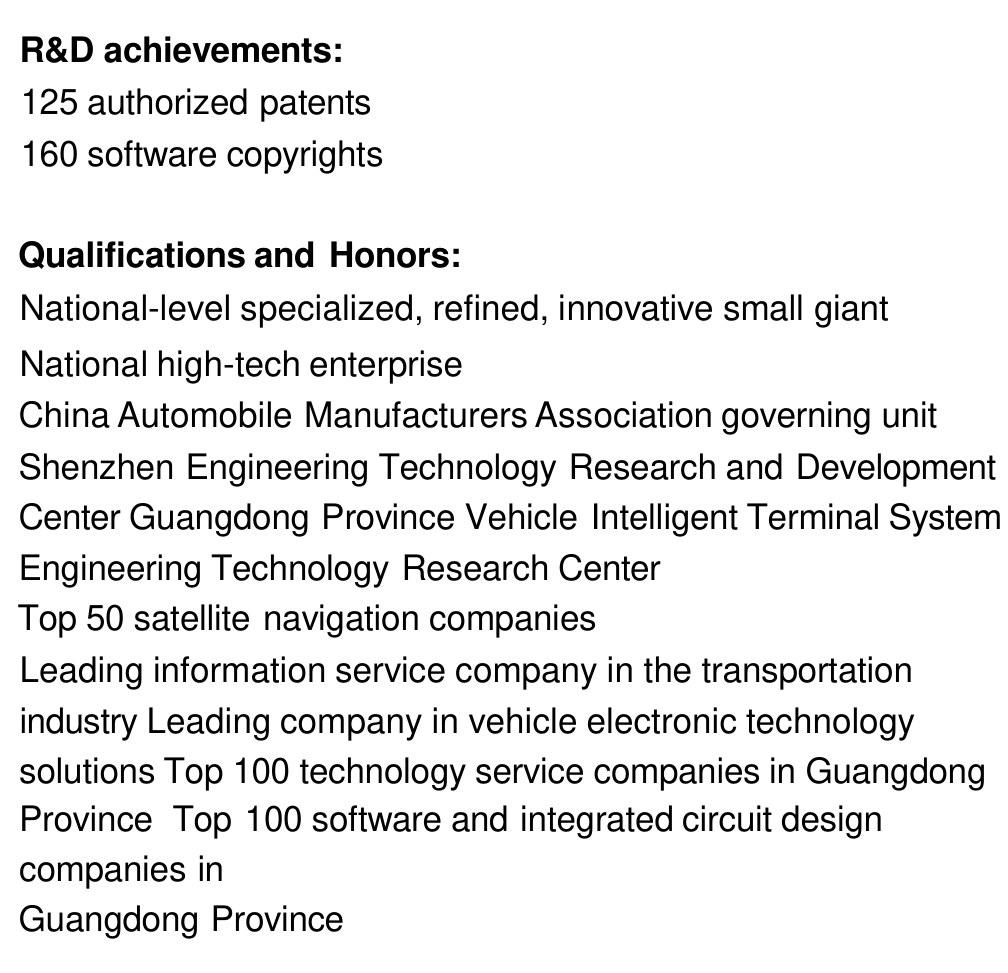
Shenzhen Zest Technology Co., Ltd. has built car multimedia systems since 2013, with a 50,000 m² own production base and a research team of more than 50 engineers. The company holds 125 authorized patents and 160 software copyrights, and its products carry CE, FCC, E-Mark, RoHS, CCC and NTRA certifications on top of the IATF 16949 and ISO 9001 quality systems. Fitment is not an afterthought here — vehicle-specific frames, harnesses and CAN configurations are part of the standard engineering workflow for every market we serve.
Fig. 6 — R&D achievements: 125 authorized patents and 160 software copyrights, with national-level specialized and innovative enterprise qualifications.
Let’s Talk About Your Project
Tell us your market and the models you need to cover — our team will confirm frame, harness and CANbus availability model by model, then reply with configuration options and an OEM quotation.
Email: info@szzest.com
WhatsApp: +86 135 9032 6885
Tel: +86 755 2369 9550 | Web: www.szzest.com
Send Inquiry →Factory: Building A, Huada Industrial Park, Fuqiao Third Industrial Zone, Fuhai Street, Bao’an District, Shenzhen, China
#CarMultimediaSystem #AndroidHeadUnit #CarHeadUnit #CANBus #CarPlayAndroidAuto #CarRadioFitment #AutoElectronics #CarAudioWholesale #OEMCarRadio #AftermarketNavigation #AndroidCarStereo #CarElectronicsFactory #CarplayBox #CarDvdPlayer #ZESTECH

Tel: +86 755 2369 9550
Email: info@szzest.com
Add:
Building A, Huada Industrial Park, Fuqiao Third Industrial Zone,
Fuhai Street, Bao 'an District, Shenzhen, Guangdong


Design:jiasuweb