


ADAS & DVR on Aftermarket Head Units: What Buyers Ask Us Most
Product Features
-
Answers to the most common buyer questions about ADAS and DVR on aftermarket Android head units: built-in vs USB DVR, 360° AVM, CAN-bus integration and car-grade reliability.
Product Introduction
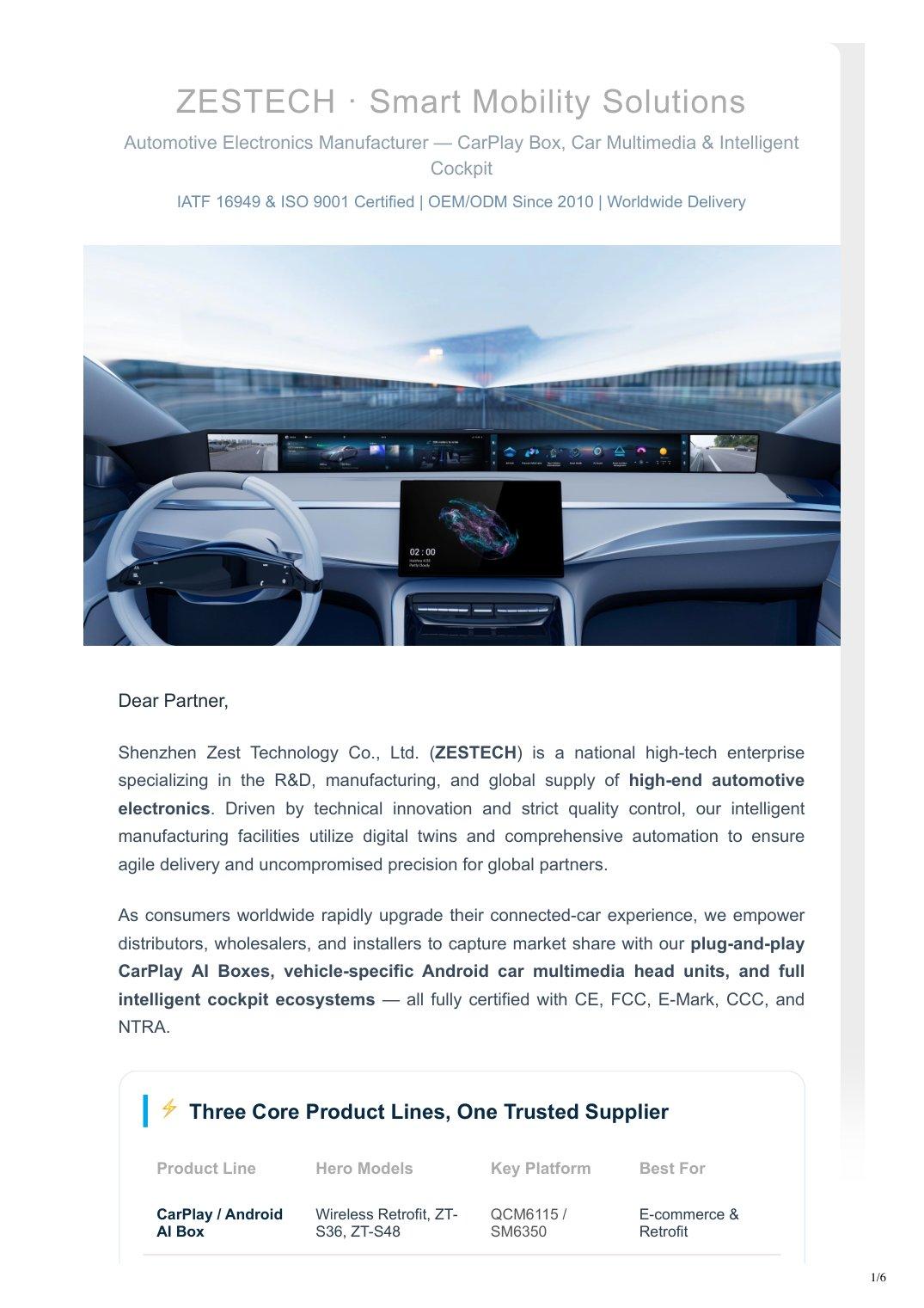
Fig.1 — ZESTECH Smart Mobility Solutions cover cockpit concept.
What Exactly Is ADAS on an Aftermarket Head Unit?
On a factory car, ADAS usually means radar, lidar and multi-camera fusion tied to the vehicle’s braking and steering computers. On an aftermarket head unit, ADAS is camera-centric and information-first:
✓Lane departure warning — available on select USB DVR cameras and built into some 360° AVM systems.
✓360° panoramic AVM — stitches four camera feeds, with blind-spot detection, lane-departure warning and moving-object detection.
✓Automatic parking assistance — detects vertical, parallel and oblique parking slots and shows guidance or controls parking maneuvers where the vehicle supports it.
✓DMS / OMS — driver-monitoring and occupant-monitoring algorithms built into intelligent-cockpit platforms for fleet and commercial tenders.
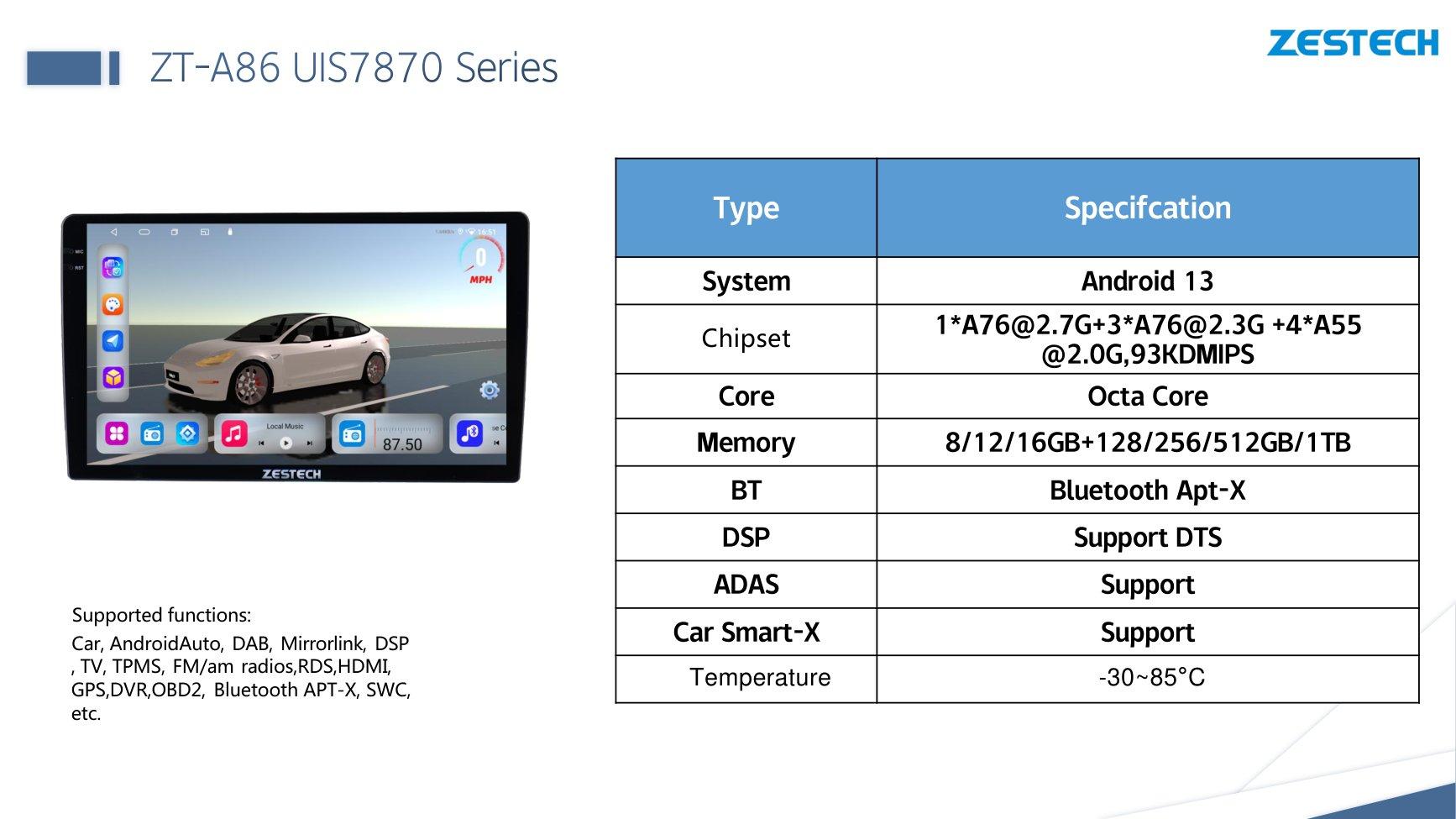
Our ZT-A86 (UIS7870) head-unit platform lists ADAS Support and Car Smart-X in its standard specification, alongside DVR, OBD2, TPMS and Bluetooth APT-X. This is not autonomous driving — it is a practical safety and convenience layer that customers increasingly expect in a premium multimedia upgrade.
The important thing for importers to communicate is what the system can and cannot do: it warns, records and helps park, but it does not brake or steer. Setting that expectation correctly is what turns a return into a repeat order.
Question 1 — Is the DVR Built In or a Separate Camera?
Both options exist.
On our higher-tier platforms, the head unit supports built-in DVR recording with front and rear dual records and two-way camera recording. The same SoC handles the multimedia system and the camera pipeline, so the recording interface lives inside the Android UI and can be triggered automatically.
For universal and retrofit installs, we also supply a USB HD DVR add-on that plugs into the head unit’s USB port and runs the fourth-generation “Traffic safety guard” APK. Its key specs are:
✓Image sensor — CMOS (1/4") low-noise image collector.
✓Lens — all-glass, 170° extra-wide angle, F2.0 aperture.
✓Recording — automatic start when the head unit powers on, cyclic overwriting.
✓Storage — micro-SD TF card (maximum 32 GB).
✓Extras on select units — clear starlight night vision, front-and-rear simultaneous recording, and lane-departure ADAS.
The USB approach is popular because it is plug-and-play: no new wiring behind the dashboard, and the recorded files are browsed directly on the head-unit screen.
DVR demand is strongest among fleet operators, ride-hailing drivers and anyone running a warranty or insurance claim workflow. A recorded clip can prove fault, protect drivers from false claims and give fleet managers daily incident visibility.
Question 2 — Does 360° Panoramic AVM Really Work Aftermarket?
Yes, but it is a four-camera install, not a software switch. Our intelligent-cockpit platforms include a built-in AVM algorithm plus the image-mosaic and correction engines needed to build a seamless bird’s-eye view. Reference performance from our design documents:
✓Boot time — system ready in less than 8 seconds.
✓Camera — 1 megapixel sensors with wide viewing angles.
✓Stitching — mature mosaic and correction algorithms.
✓Core view modes — parking-spot recognition, parking guidance, transparent chassis display.
✓Extended safety functions — blind-spot detection, lane-departure warning and moving-object detection.
For automatic parking assistance, the platform supports vertical, parallel and oblique slot detection, with real-time video display, voice broadcast, chassis perspective and memory parking as extended functions.
Installation determines image quality. Four cameras must be mounted low on the front, rear and sides of the vehicle, aligned and calibrated so the software can stitch the feeds. A professional installer will also confirm the right trigger signals from turn indicators and reverse lights, giving a smooth top-down view for tight parking.
Fig.2 — 360° panoramic monitoring functions: boot time <8 s, 1 MP camera, blind-spot / lane-departure / moving-object detection.
Question 3 — Will It Work With My Car’s CAN Bus and Reversing Camera?
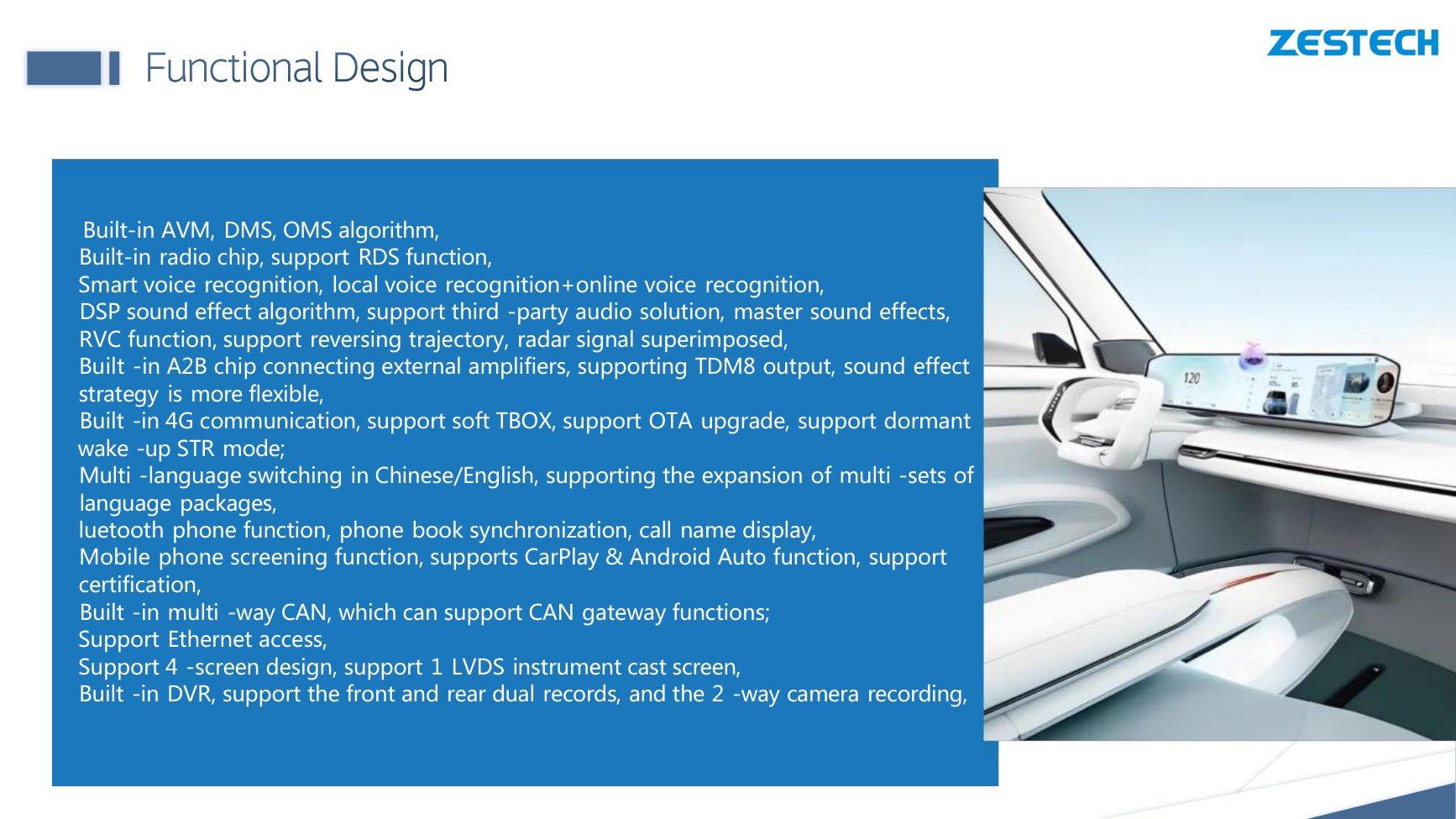
Integration is the make-or-break issue for aftermarket ADAS. Our functional design includes built-in multi-way CAN that can support CAN-gateway functions, so the head unit can read vehicle data for steering-wheel controls, AC display, parking sensors and radar signals.
For reversing, the platform provides RVC function with reversing trajectory and radar signal superimposed. This means the factory rear camera (or an added AHD camera) can display dynamic parking lines and radar overlays on the head-unit screen.
Audio integration is also covered: a built-in A2B chip connects external amplifiers and supports TDM8 output, making sound-effect strategy more flexible when the head unit replaces a premium factory amplifier.
Fitment matters here too. A vehicle-specific frame and harness package lets the head unit talk to the car’s CAN bus cleanly. Without the right decoder you may lose steering-wheel controls, climate display, parking-sensor graphics and the factory reversing-camera trigger. Always match the head unit to the frame-harness-CAN kit for each target model.
Fig.3 — Functional design overview: built-in AVM, DMS, OMS, DVR, multi-way CAN, A2B audio and reversing trajectory.
Question 4 — Is It Reliable in Extreme Climates?
Car-grade temperature rating is not marketing. Our head-unit platforms are specified for −30 °C to +85 °C operating temperature, covering Middle Eastern summers, Russian winters and tropical humidity. Storage range extends to −30 °C to +85 °C.
Electrical specs match standard passenger-car systems:
✓Operating voltage — 9–16 V DC.
✓Amplifier — TDA7851 family, 4 × 25 W MOSFET output on reference platforms.
✓Startup — cold-start ≤30 s, hot-start ≤2 s on most platforms.
These numbers matter because a head unit that reboots in summer traffic or records corrupted files in freezing weather will generate warranty claims faster than it generates profit.
Question 5 — Can I Brand the Software and Packaging?
Yes. Our standard OEM program covers custom giftboxes, logo printing and start-up / boot logos from a 100-piece MOQ. For distributors who want a unique housing, new tooling development is available from a 1,000-piece MOQ, with the tooling fee refunded once accumulated orders reach 5,000 pieces. UI themes can also be localized and branded so the interface carries your brand, not ours.
Fig.4 — ZT-A86 (UIS7870) platform specification: Android 13, ADAS support, Car Smart-X, DVR, Bluetooth Apt-X and −30~85 °C rating.
Product Introduction
Why Choose ZESTECH
Fig.5 — ZT-P133 Intelligent Cockpit Platform integrates digital LCD instrument cluster, infotainment center and ADAS for OEM tenders and fleets.
Shenzhen Zest Technology Co., Ltd. (ZESTECH) is a national high-tech enterprise specializing in the R&D, manufacturing and global supply of high-end automotive electronics. Since 2013 we have built strategic partnerships with Hyundai, Nissan, Toyota, Chery and JAC, and our sales network reaches more than 30 countries and regions.
Let’s Talk About Your Project
Tell us your target market, vehicle list and the camera package your customers expect. We will confirm platform compatibility, CAN-bus coverage and a branded OEM roadmap.
Email: info@szzest.com
WhatsApp: +86 135 9032 6885
Tel: +86 755 2369 9550 | Web: www.szzest.com
Send Inquiry →Factory: Building A, Huada Industrial Park, Fuqiao Third Industrial Zone, Fuhai Street, Bao’an District, Shenzhen, China
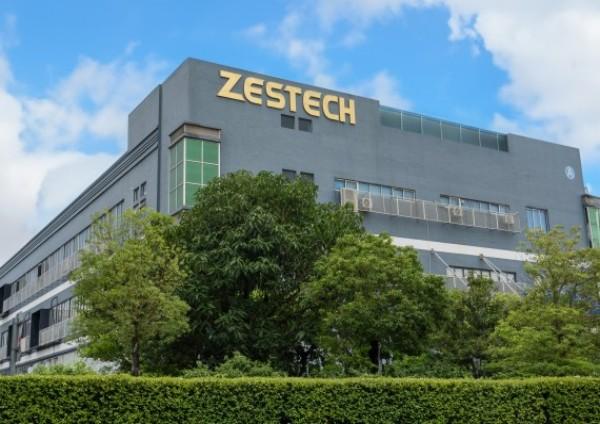
Fig.6 — ZESTECH production base: in-house tooling, injection, stamping and 7 production lines.
#ADAS #DVR #AftermarketHeadUnit #AndroidCarRadio #360AVM #LaneDepartureWarning #BlindSpotDetection #CarMultimediaSystem #CarElectronicsSupplier #OEMCarRadio #AutoPartsImporter #FleetSafety #ConnectedCar #ZESTECH #SmartMobility

Tel: +86 755 2369 9550
Email: info@szzest.com
Add:
Building A, Huada Industrial Park, Fuqiao Third Industrial Zone,
Fuhai Street, Bao 'an District, Shenzhen, Guangdong


Design:jiasuweb