

ZT-A38: The 8-Core MTK6765 Android 10 Platform Built for Fast Market Entry
Product Features
-
The ZESTECH ZT-A38 runs a 12nm MediaTek MTK6765 8-core (4x Cortex-A53 2.2GHz + 4x Cortex-A53 1.6GHz, up to 2.3GHz) with Android 10.0, a 2K 120Hz MIPI capacitive display, LPDDR4X 2G/4G/6G RAM, 32G-128G UMCP storage, TDA785x 4.1 channel audio, a BU32107 or
Product Introduction
ZESTECH. | Shenzhen Zest Technology · Est. 2010 |
ZT-A38: The 8-Core MTK6765 Android 10 Platform Built for Fast Market Entry
The ZESTECH ZT-A38 pairs an octa-core MediaTek MTK6765 on a 12nm process with Android 10.0, a 2K 120Hz MIPI display, a software DSP with 4.1 channel sound, 4G full-network connectivity and a public interface definition — a platform that shortens development time instead of extending it.
A Platform Tuned for Time-to-Market
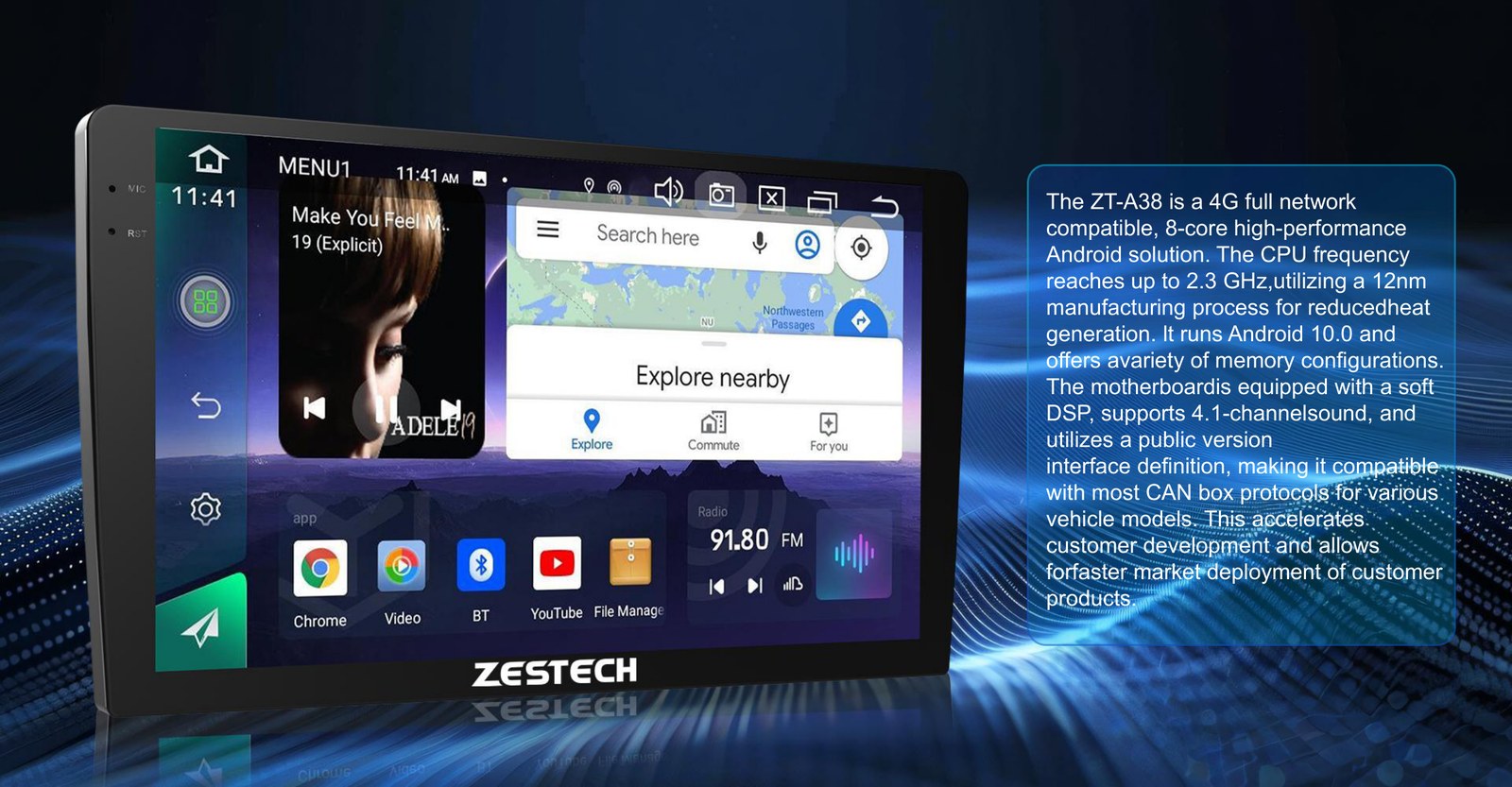
The ZT-A38 is a 4G full network compatible, 8-core high-performance Android solution. The CPU frequency reaches up to 2.3GHz on a 12nm manufacturing process that reduces heat generation, and it runs Android 10.0 with a choice of memory configurations. What separates it from a generic board is the interface definition: the ZT-A38 uses a public version pin-out compatible with most CAN box protocols across vehicle models — which means less reverse engineering per car and a faster route to market for the customer product built on top of it.
01 8-core computeFour Cortex-A53 performance cores plus four efficiency cores keep navigation, media and background services running at the same time. | 02 12nm thermalsA 12nm process lowers heat generation inside a sealed dashboard cavity, where thermal headroom decides long-term reliability. | 03 Android 10.0A mature, widely-deployed Android base with the driver and app ecosystem already proven in the field. |
04 Public interfaceA public version interface definition compatible with most CAN box protocols for various vehicle models — less integration work per SKU. |

The MTK6765 Core Platform
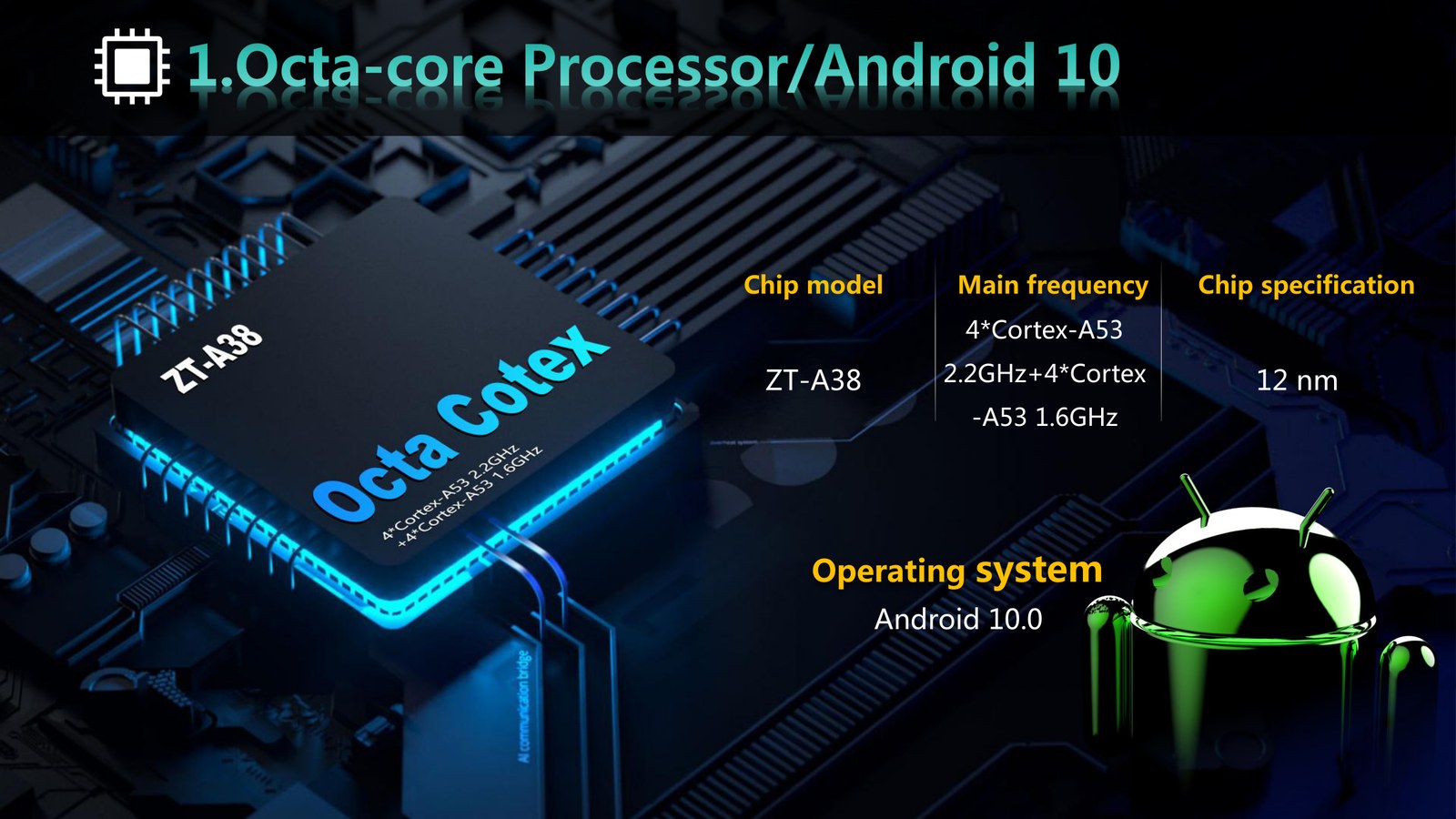
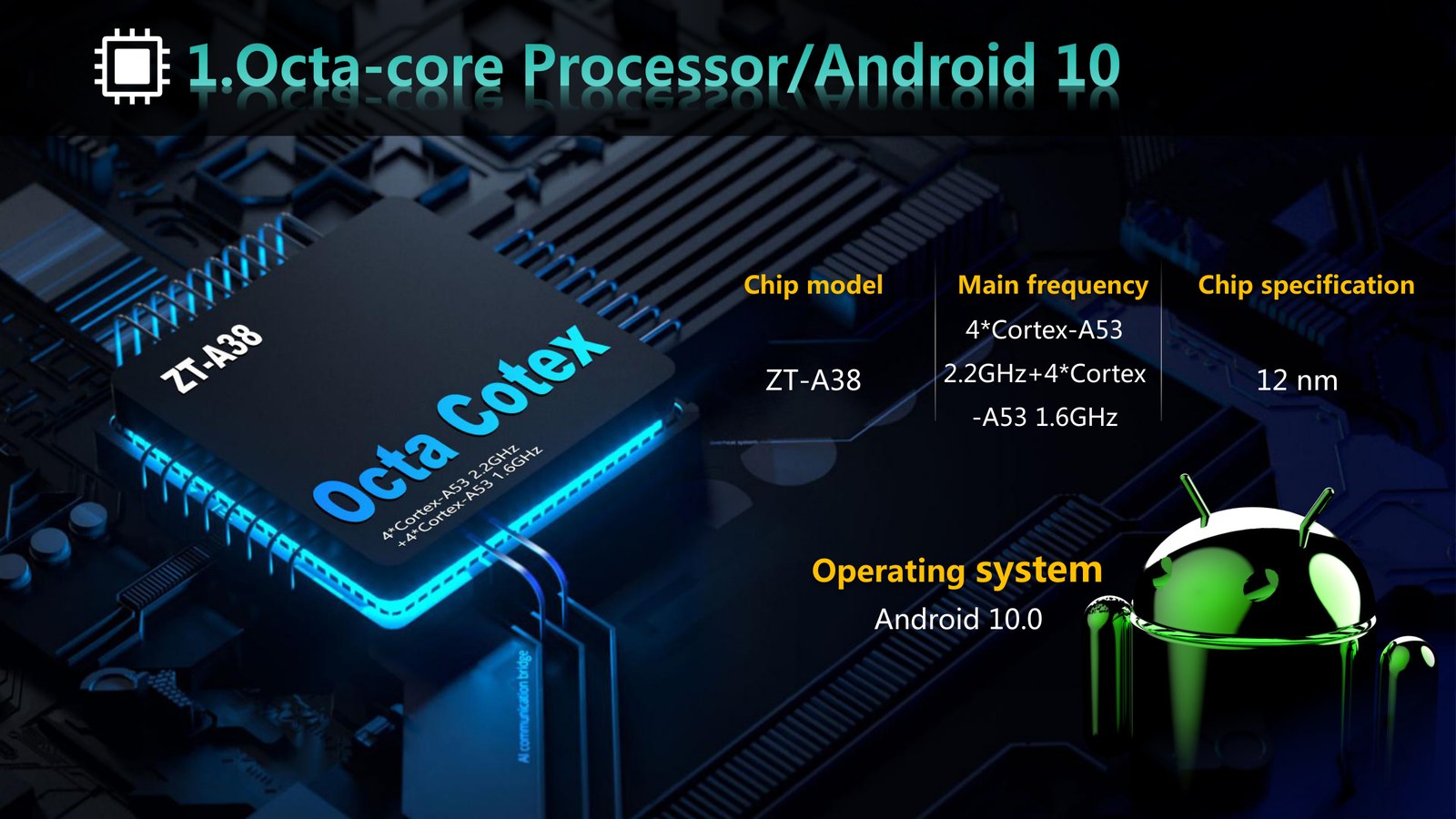
At the centre is the MediaTek MTK6765, a 12nm octa-core configured as 4 × Cortex-A53 at 2.2GHz plus 4 × Cortex-A53 at 1.6GHz. Eight cores matter in a head unit for a simple reason: navigation routing, music decoding, hands-free calling and over-the-air housekeeping all want CPU time at once, and four cores force those tasks to wait in line.
Main frequency reaches up to 2.3GHz depending on the configuration, and the 12nm chip specification keeps power draw and heat under control without an oversized heatsink — important when the board sits behind a closed fascia in a hot cabin.
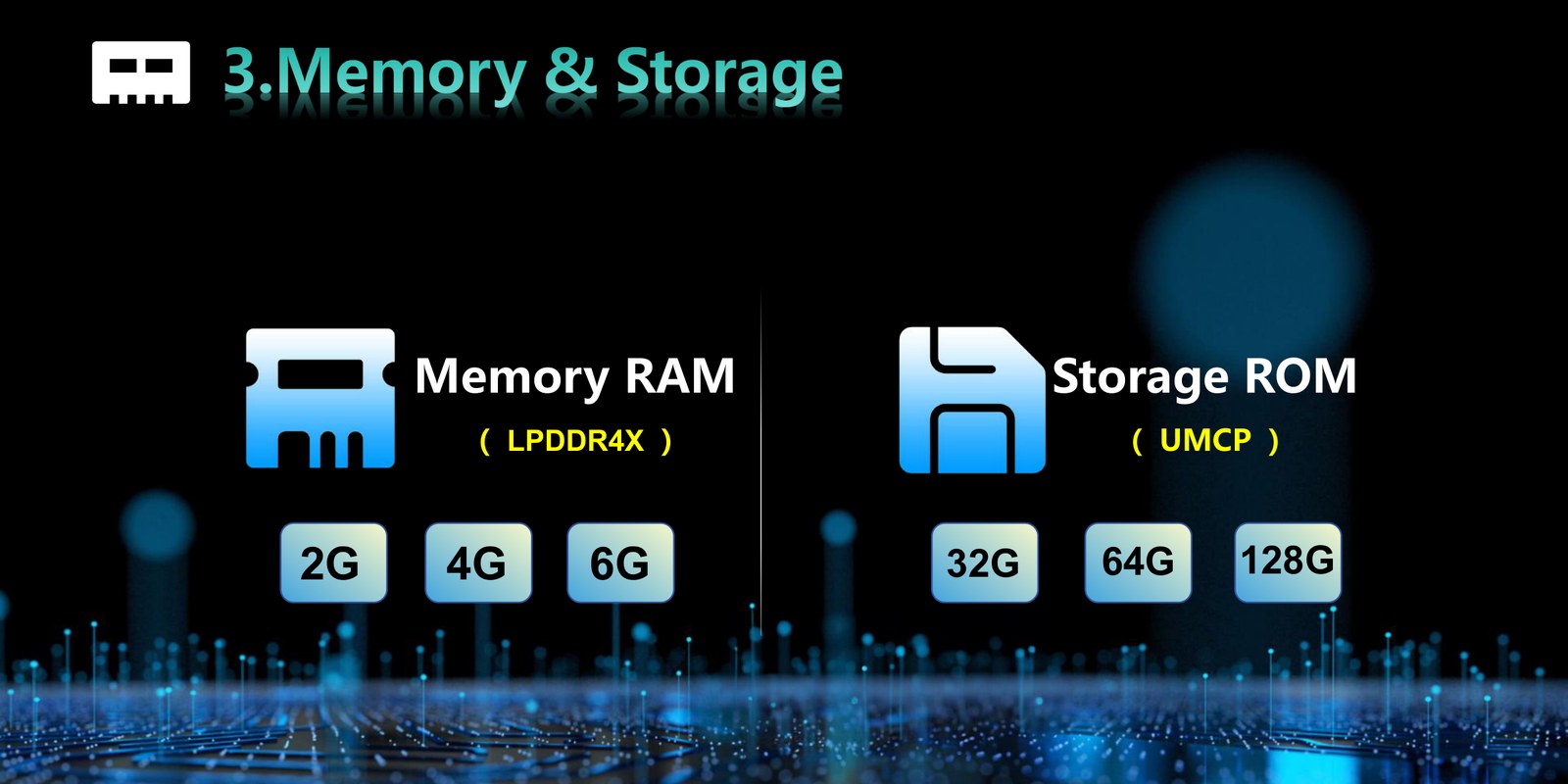
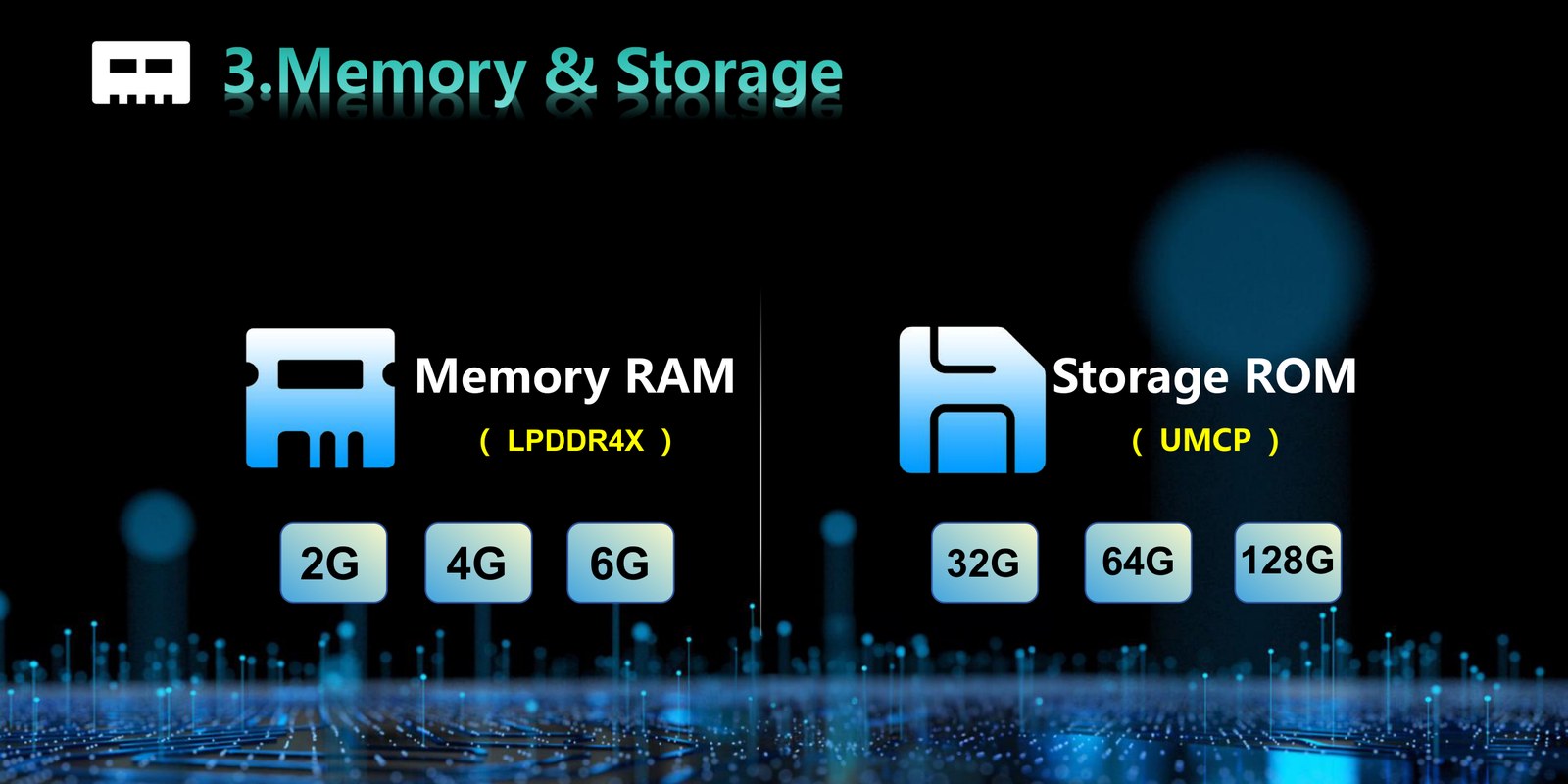
Memory and storage are configured to order. RAM runs LPDDR4X in 2G, 4G or 6G capacities; storage uses UMCP in 32G, 64G or 128G. That ladder lets a single board cover everything from an entry-level taxi build to a well-equipped retail unit without a second design cycle.
2K Display at 120Hz
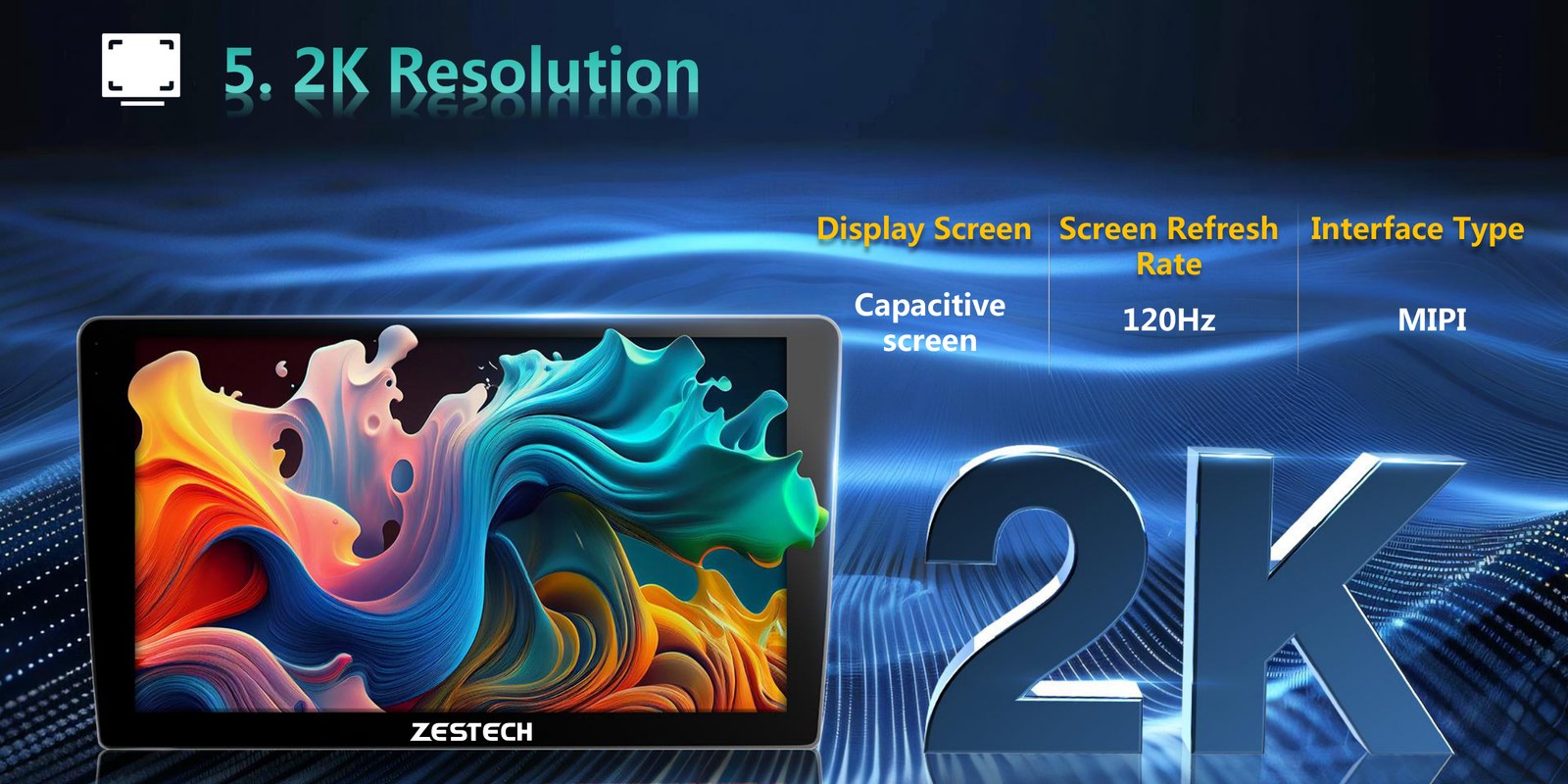
The display path is built for both quality and speed. A capacitive touch screen drives through a MIPI interface at up to 2K resolution with a 120Hz refresh rate — double the 60Hz of the previous generation. In practice that means smoother map panning, tear-free switching between navigation and the rear camera, and noticeably better touch response.

2K ResolutionHigh pixel density for maps, video and split-screen layouts. | 120 Refresh rate120Hz updates cut motion blur and touch lag at speed. | MI InterfaceMIPI keeps the panel link fast and resistant to interference. |
Audio Architecture and the Software DSP
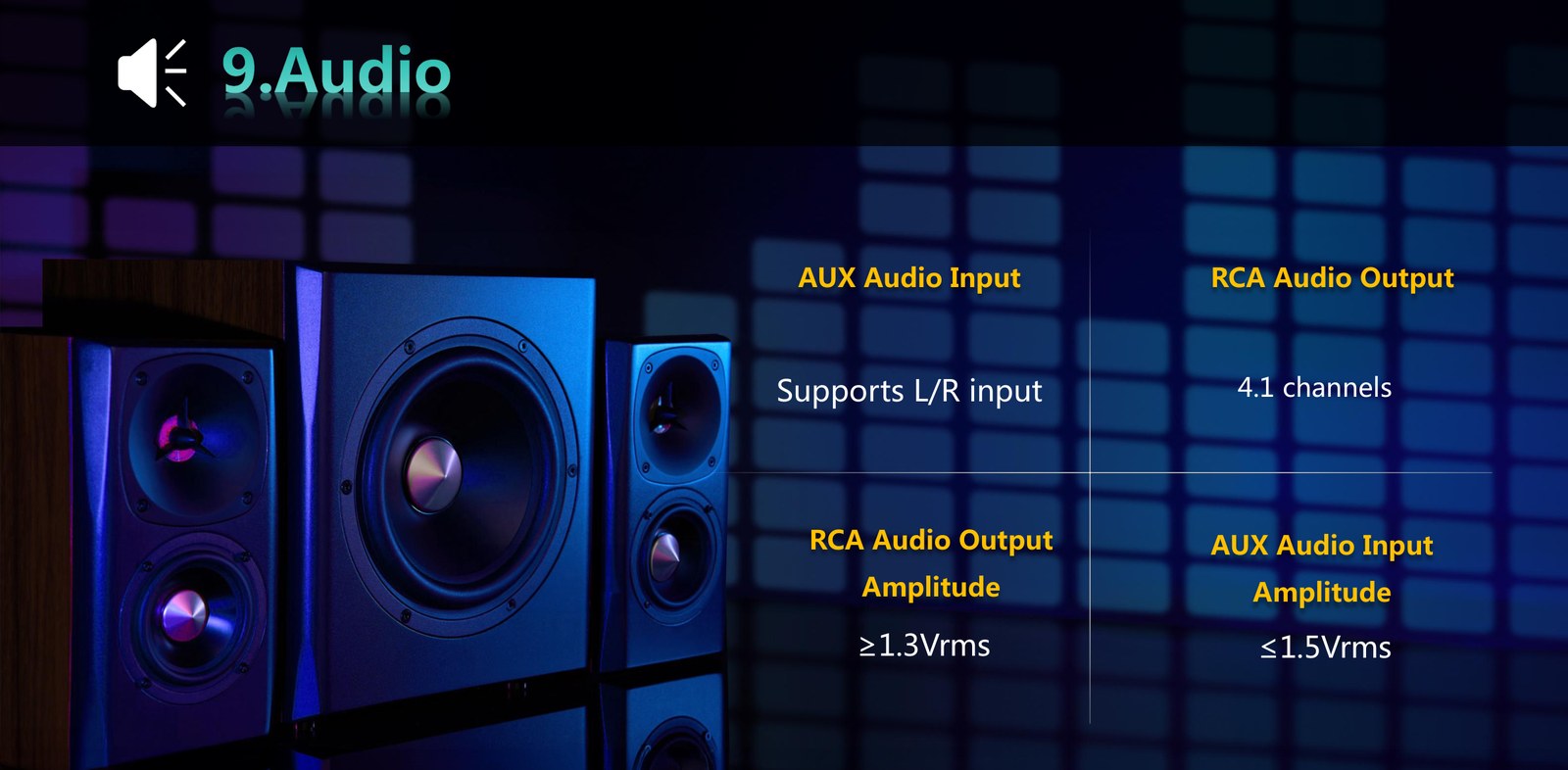
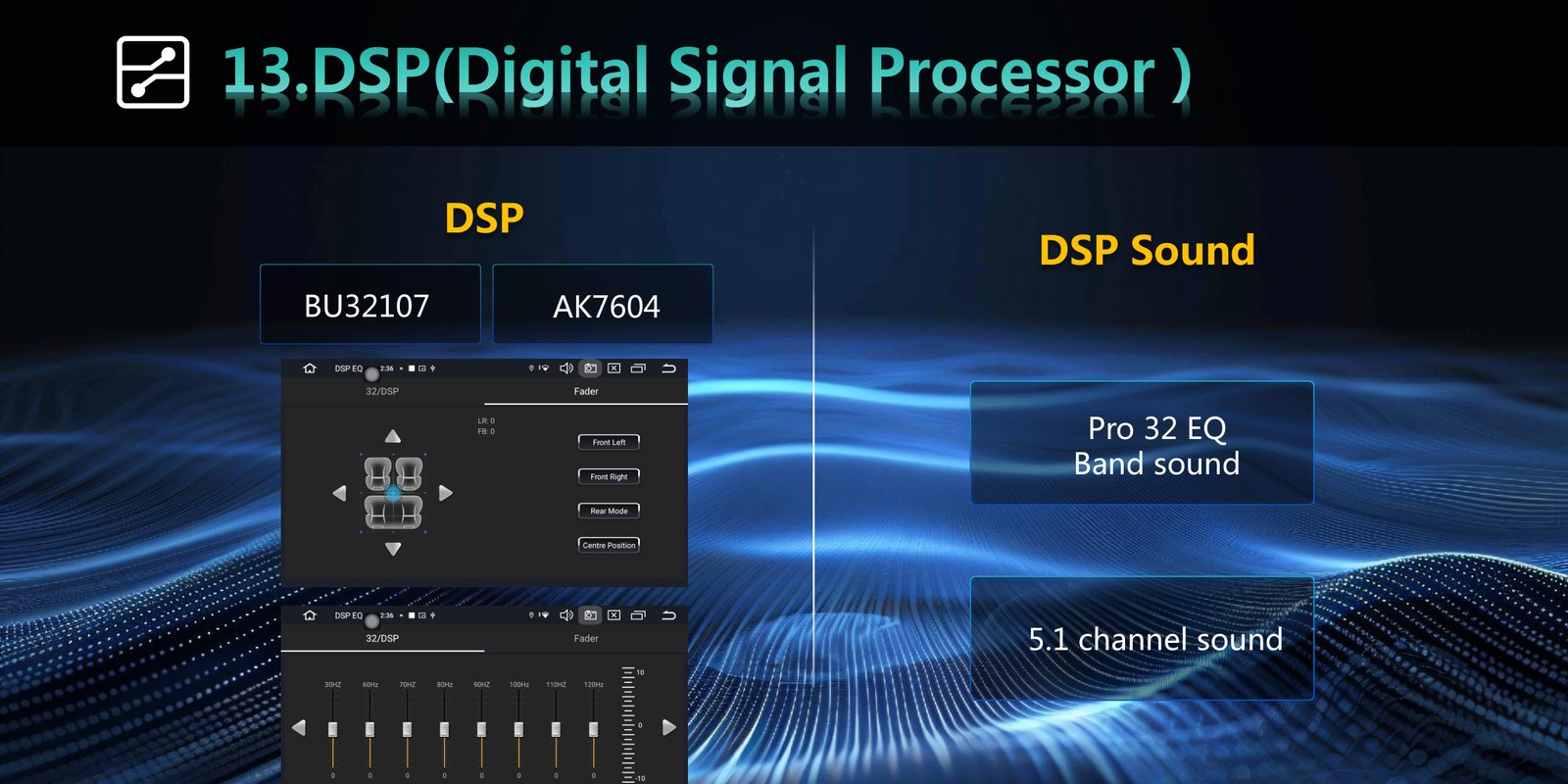
Audio is where many Android head units cut corners, so it is worth being specific. The ZT-A38 runs audio through a TDA7851 / 7850 / 7738 power amplifier in a 4.1 channel output configuration, with two AUX inputs (left and right) available for external sources.

The software DSP section is the differentiator. The board carries a soft DSP built on BU32107 or AK7604, supporting a 32-band professional EQ alongside 5.1 channel surround sound. A 32-band equalizer is a tuning instrument rather than a marketing word: it lets an installer correct cabin resonance at specific frequencies instead of reaching for a single global bass control.

4G, WiFi and Bluetooth Connectivity
Three radios cover the ways a modern vehicle stays online, and the band list is broad enough for most export markets from a single hardware variant.
4G full network
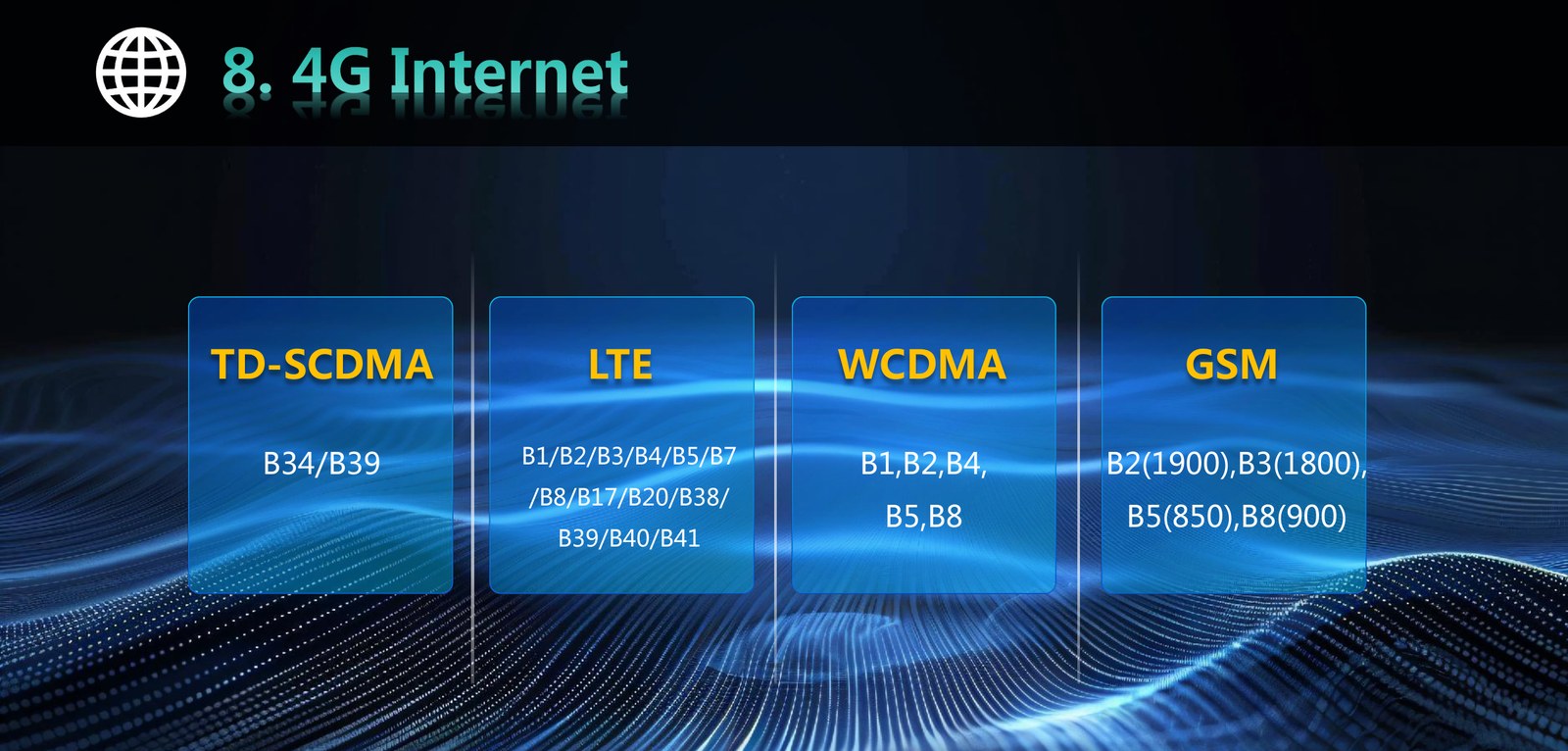
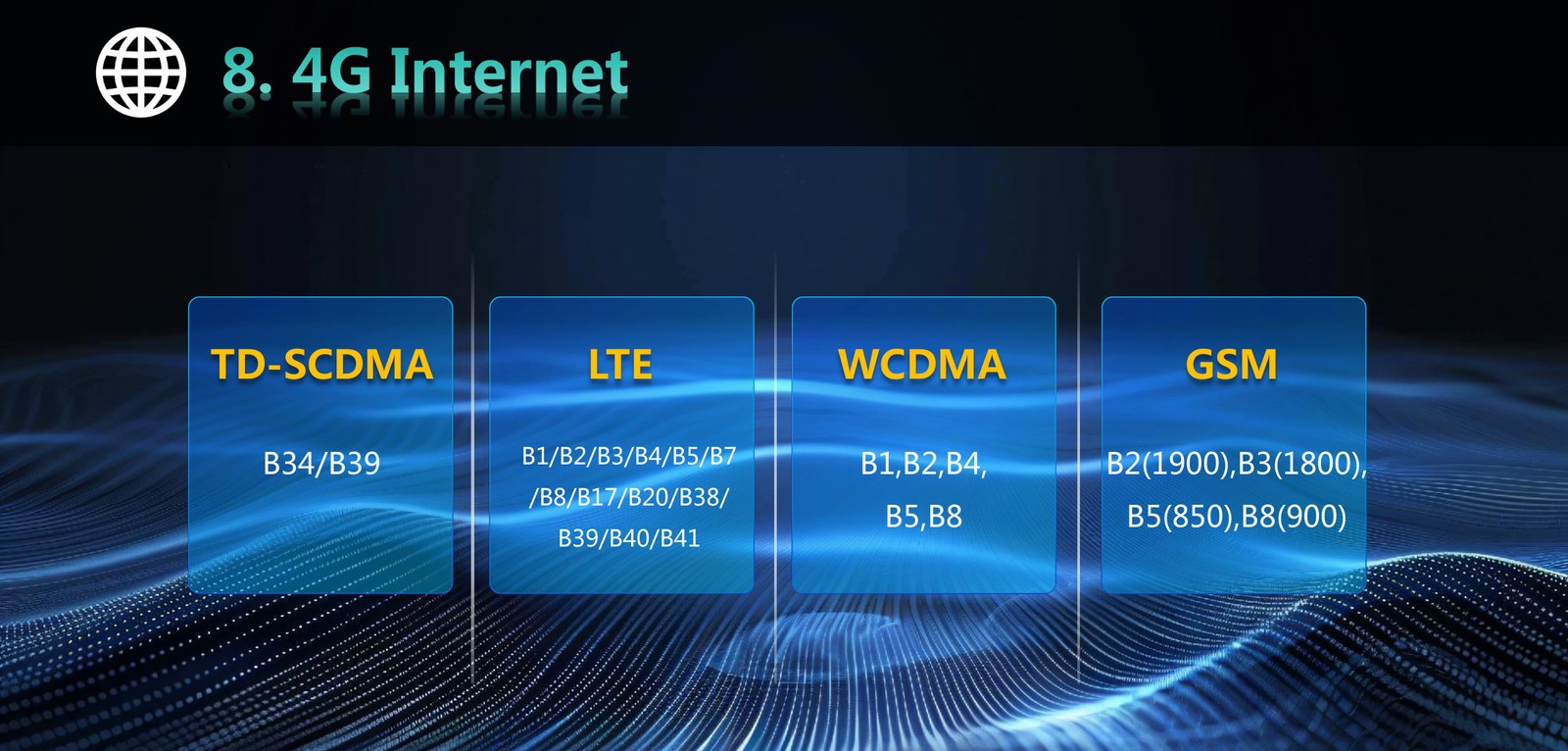
The modem covers TD-SCDMA B34 and B39; LTE across B1, B2, B3, B4, B5, B7, B8, B17, B20, B38, B39, B40 and B41; WCDMA B1, B2, B4, B5 and B8; and GSM 850 / 900 / 1800 / 1900. That is the coverage needed for Europe, the Middle East, Africa, South America and most of Asia without region-specific hardware.
Radio and navigation
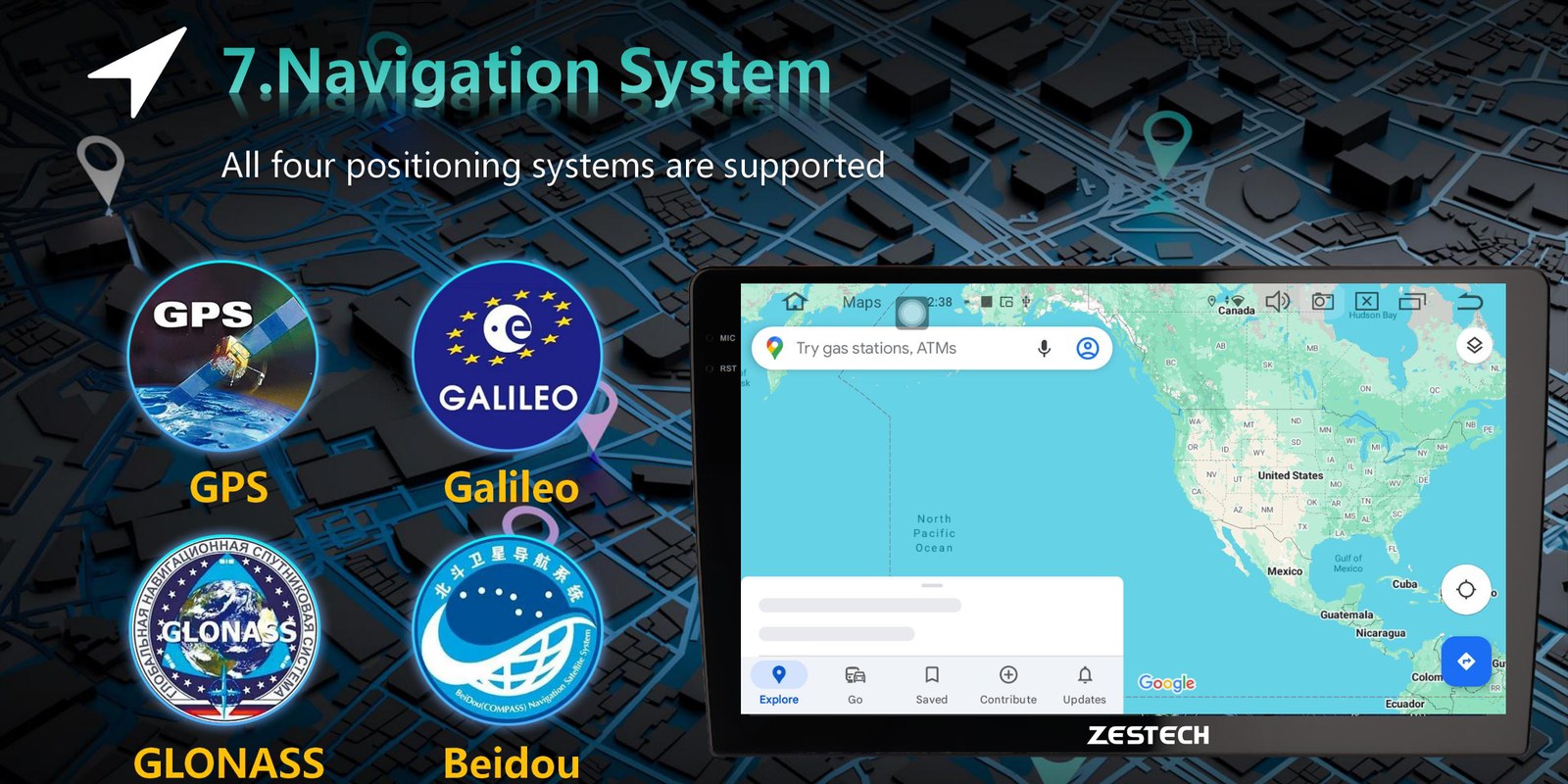
The radio section uses a TEF8035 tuner with RDS covering 65MHz to 108MHz, which includes the OIRT range still used in parts of Eastern Europe. On the positioning side all four global satellite systems are supported — GPS, Galileo, GLONASS and BeiDou — so lock is acquired quickly and held in urban canyons where a single constellation would drop out.

Bluetooth 5.0
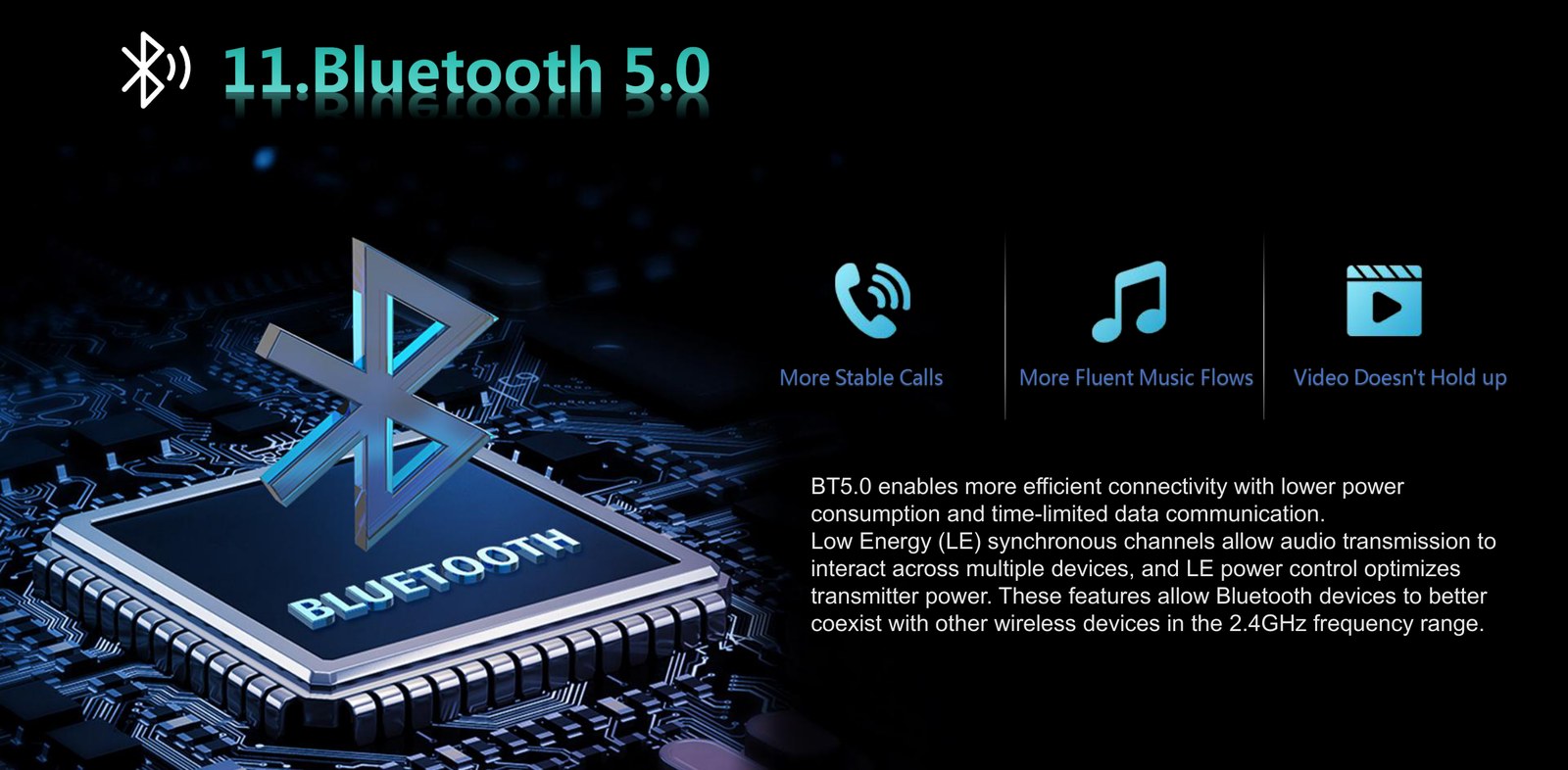
Bluetooth 5.0 enables more efficient connectivity with lower power consumption and time-limited data communication. Low Energy synchronous channels allow audio transmission across multiple devices, and LE power control optimises transmitter power. The practical result is more stable calls, more fluent music streaming from a phone, and better coexistence with other 2.4GHz devices in the cabin.

Video, File Formats and I/O
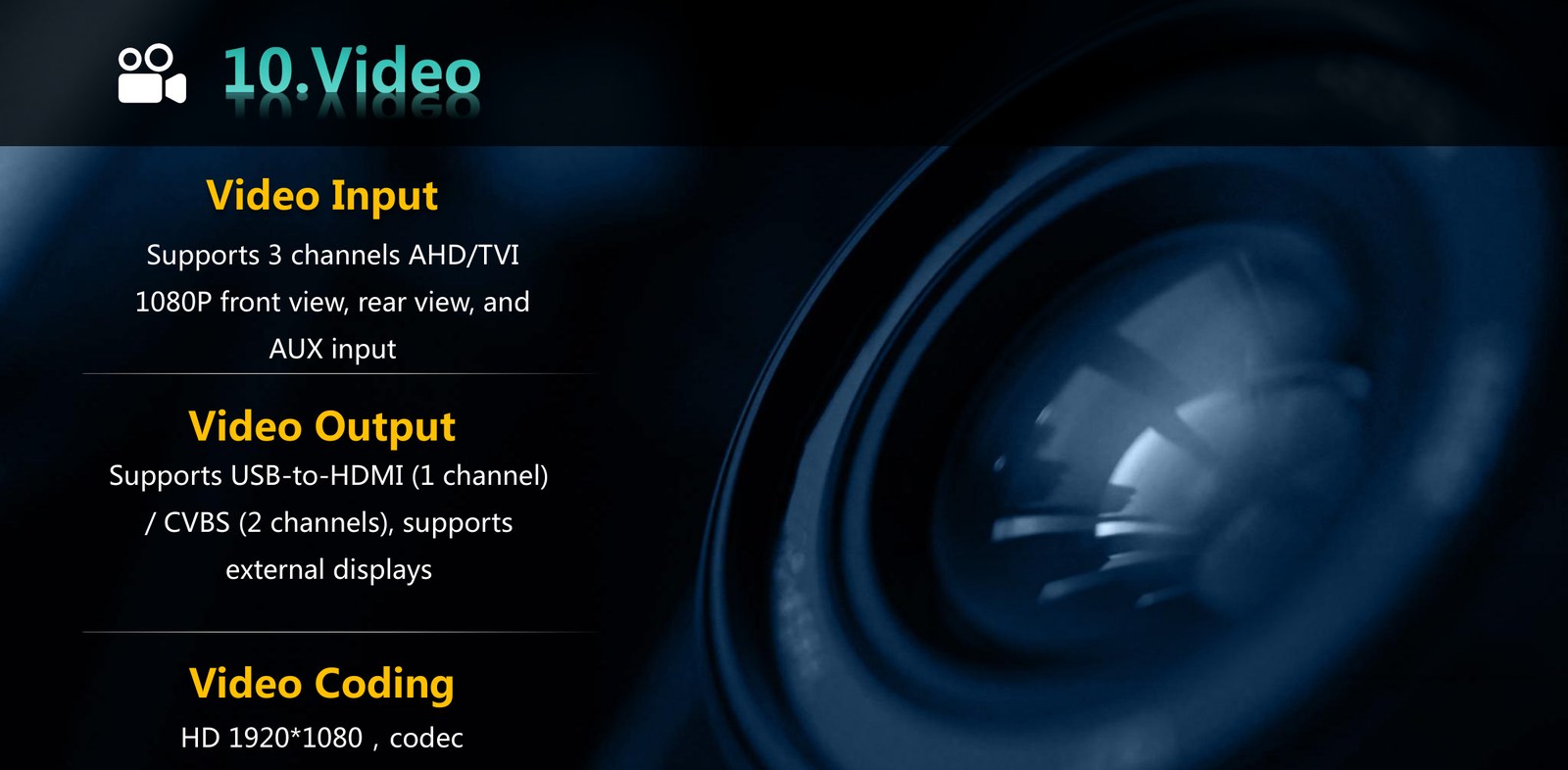
The video path is more capable than the 1080p front-panel output suggests. Video input supports three channels of AHD or TVI at 1080P across front view, rear view and AUX input. Video output provides USB-to-HDMI (one channel) plus CVBS (two channels) for driving external displays, and video coding runs HD 1920 × 1080 with hardware codec support.

File format support is broad enough that installers do not need to convert a customer media library. Audio covers MPEG, OGG, FLAC, AAC, AMR, MIDI and APE; video covers MPEG-1, MPEG-2, MPEG-4, AVI and RMVB; images cover JPG, JPEG, BMP, GIF and PNG for wallpaper, boot logo and browsing.
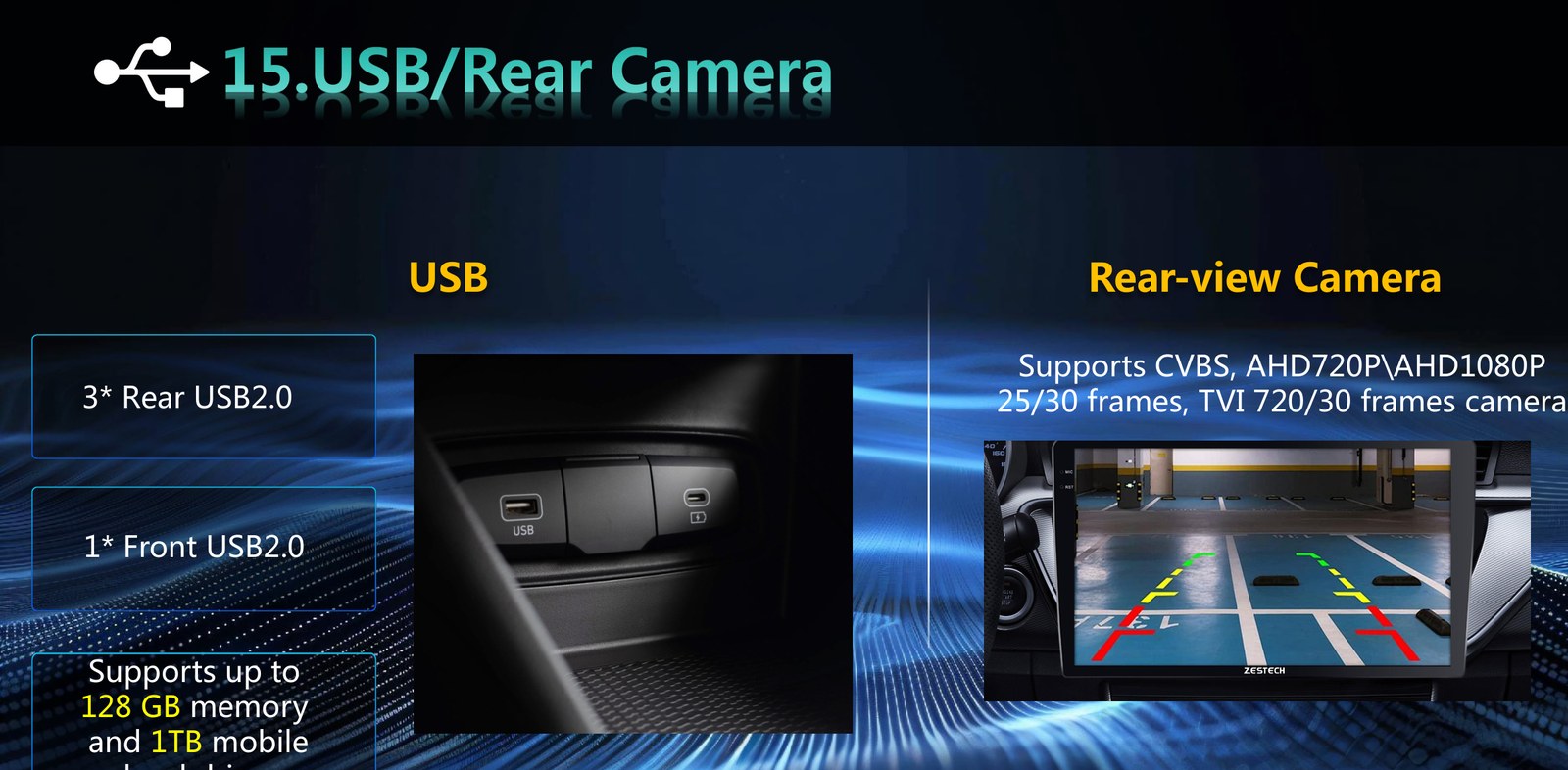
USB provision is generous: three rear USB 2.0 ports plus one front USB 2.0 port. Storage is certified to 128GB of memory and 1TB mobile hard drives — enough for offline maps, a media library and dash-camera archiving on the same unit.

For the camera path specifically, the ZT-A38 handles CVBS, AHD 720P and AHD 1080P at 25 or 30 frames per second, plus TVI 720 at 30 frames. That covers the analogue, AHD and TVI cameras installers actually stock rather than locking a build to one camera standard.
CV CVBSLegacy composite camera support for basic reverse-camera builds. | AH AHDAHD 720P and 1080P at 25/30fps for sharp rear-view imaging. | TV TVITVI 720 at 30fps for installers standardised on that format. |
Optional CarPlay and Android Auto
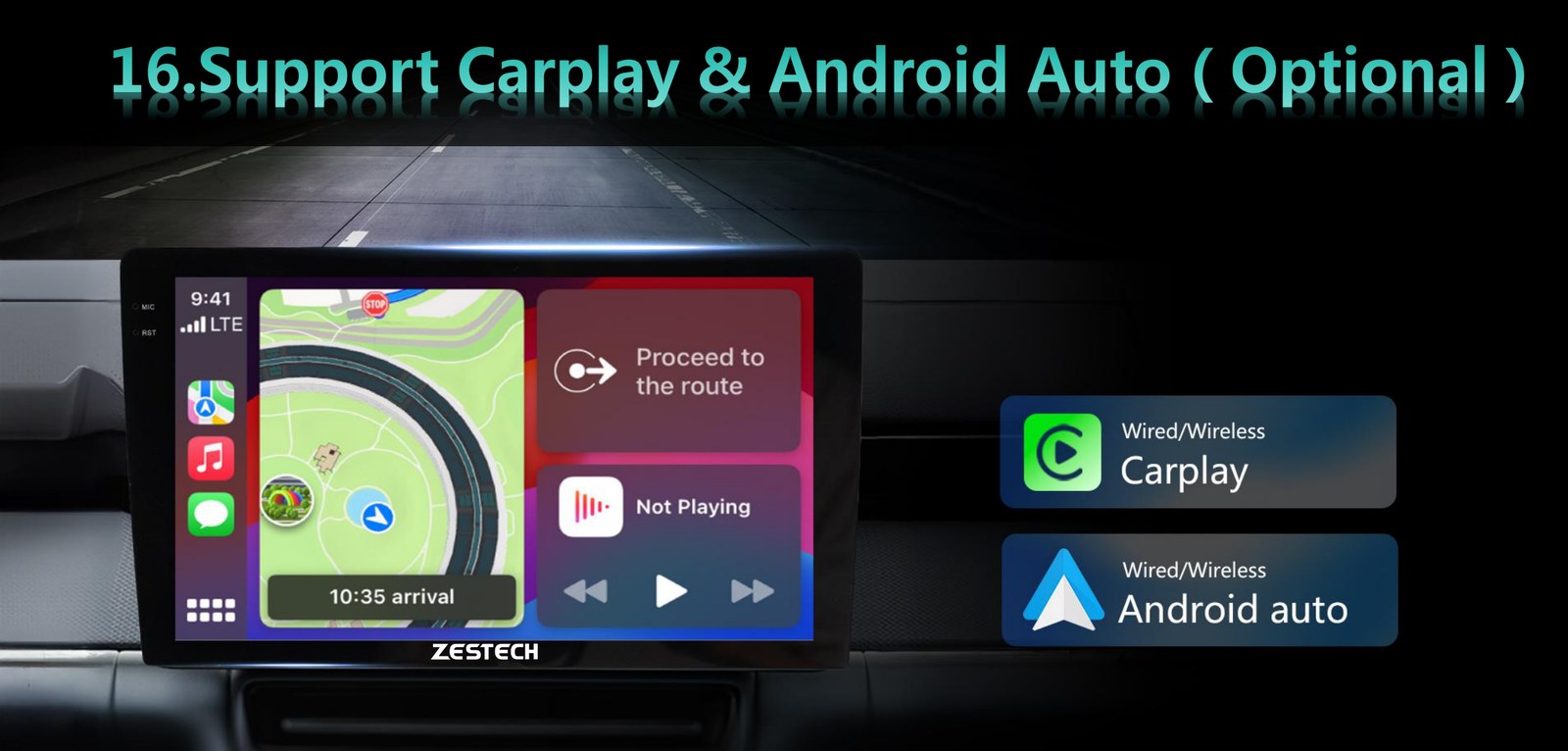
For markets where phone projection drives the purchase decision, the ZT-A38 offers CarPlay and Android Auto as an option, both wired and wireless. A USB dongle or an integrated module variant lets one platform serve both a price-sensitive retail channel and a premium tier without redesigning the board.

Optional Features for Premium Builds
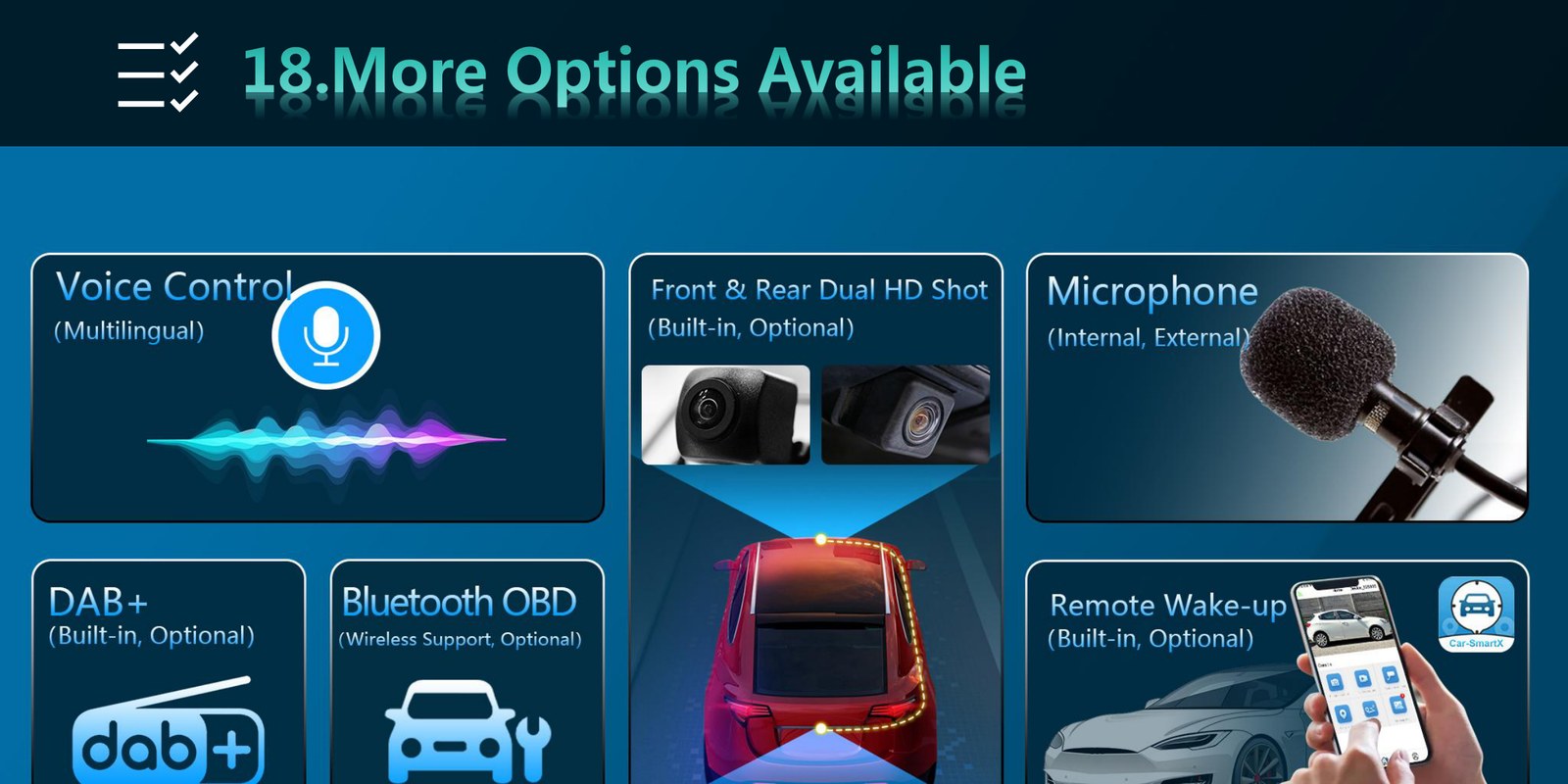
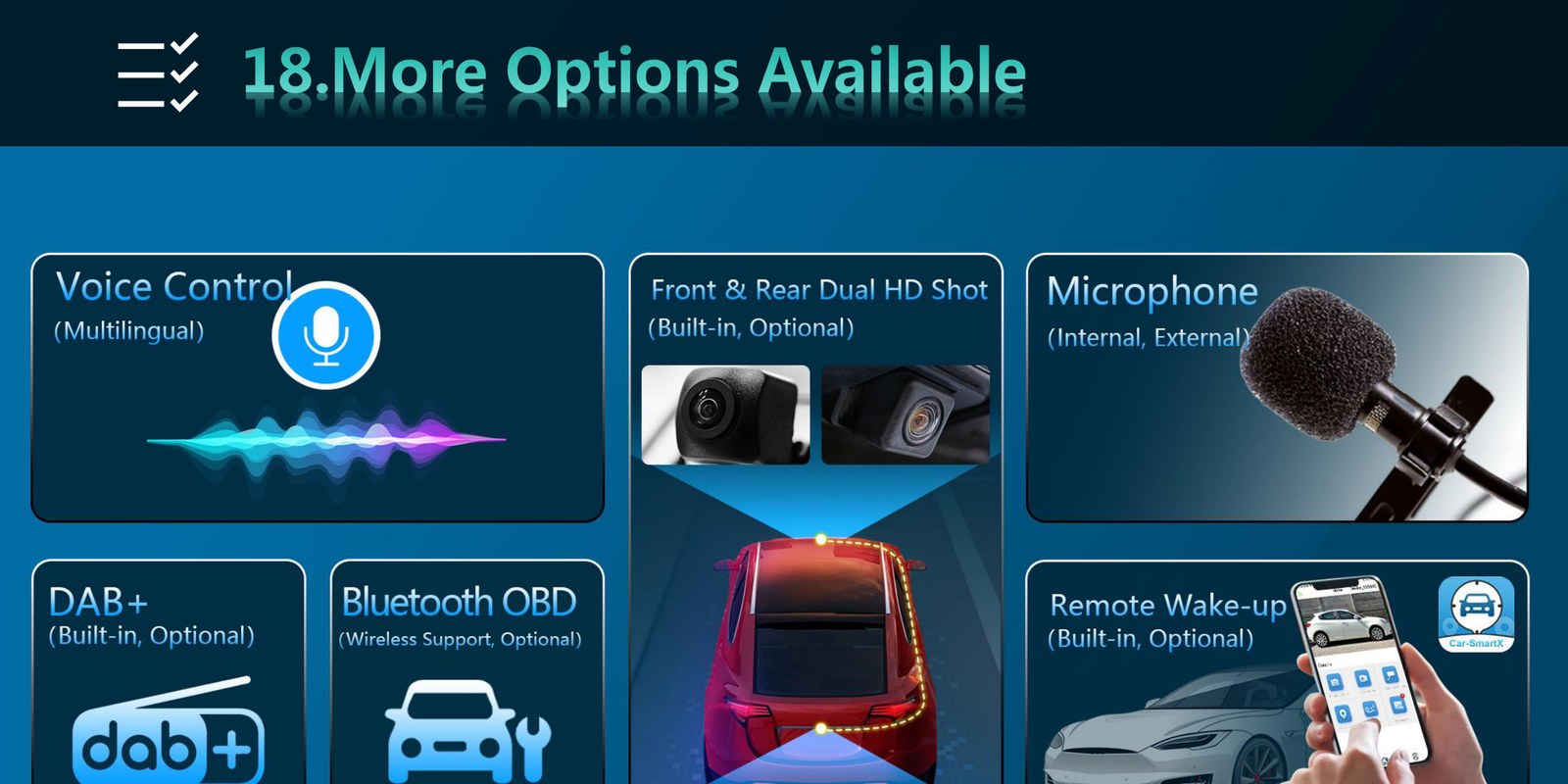
Beyond the core specification, the ZT-A38 supports a set of options that let a distributor differentiate retail tiers from the same platform:
VC Voice controlMultilingual voice commands for navigation, calls and media without taking hands off the wheel. | MC MicrophoneInternal or external microphone options to suit different fascia geometries and noise environments. | DAB DAB+ radioDigital audio broadcasting for European markets where analogue FM is being phased down. |
OBD Bluetooth OBDWireless OBD connectivity for vehicle diagnostics and telemetry apps on the head unit screen. | RW Remote wake-upBuilt-in remote wake-up that brings the unit online for scheduled and remote functions. | DS Dual HD shotOptional front and rear dual HD recording for dash-camera and journey documentation use. |
ZT-A38 vs the Generation It Replaces
Where it matters commercially: a 12nm octa-core on Android 10 with 2K 120Hz output covers the specification sheet of a modern head unit, while the public interface definition and broad CAN box compatibility remove the integration work that usually delays a launch by weeks.
Technical Specifications
Who the ZT-A38 Suits
01 DistributorsOne 12nm platform with a RAM and storage ladder covers entry through mid-tier price points without a second board design — and the public interface definition shortens integration on every car model. | 02 InstallersBroad camera format support, four USB ports and multi-constellation GNSS reduce build time and improve the reliability of what is fitted. | 03 OEM and fleet brandsConfigurable RAM, storage, DSP platform, options and UI make the ZT-A38 a ready private-label navigation head for OEM programmes and fleet retrofit contracts. |
OEM / ODM: Build It As Your Own
ZESTECH runs R&D, mould development, manufacturing and after-sales in-house, with 15+ years in automotive electronics, distribution in 50+ global markets and partnerships with 100+ OEM brands. For the ZT-A38 that means:
HW Hardware configurationRAM and storage tiers, DSP platform, amplifier IC, connector types and colour finishes selected to your market. | UI Software and UIFirmware development, custom launcher, boot logo, language packs and region-specific radio and band settings. | PKG Brand and packagingLogo branding on product and packaging, custom retail box, documentation and accessory kit. |
Let’s Talk About Your Market
Tell us your market, target configuration and retail price point. We will send the ZT-A38 full specification pack, sample availability, MOQ and private-label options — normally within one working day.
Shenzhen Zest Technology Co., Ltd. — a national high-tech enterprise founded in 2010, integrating independent R&D, mould development, manufacturing and worldwide after-sales for intelligent mobility and automotive electronics.
#MTK6765 #Android10 #CarMultimedia #CarNavigation #CarHeadUnit #CarAudio #OEM #ODM #ZESTECH


